
USB-C Cable Teardown: What’s Inside Your Phone Charger Wire
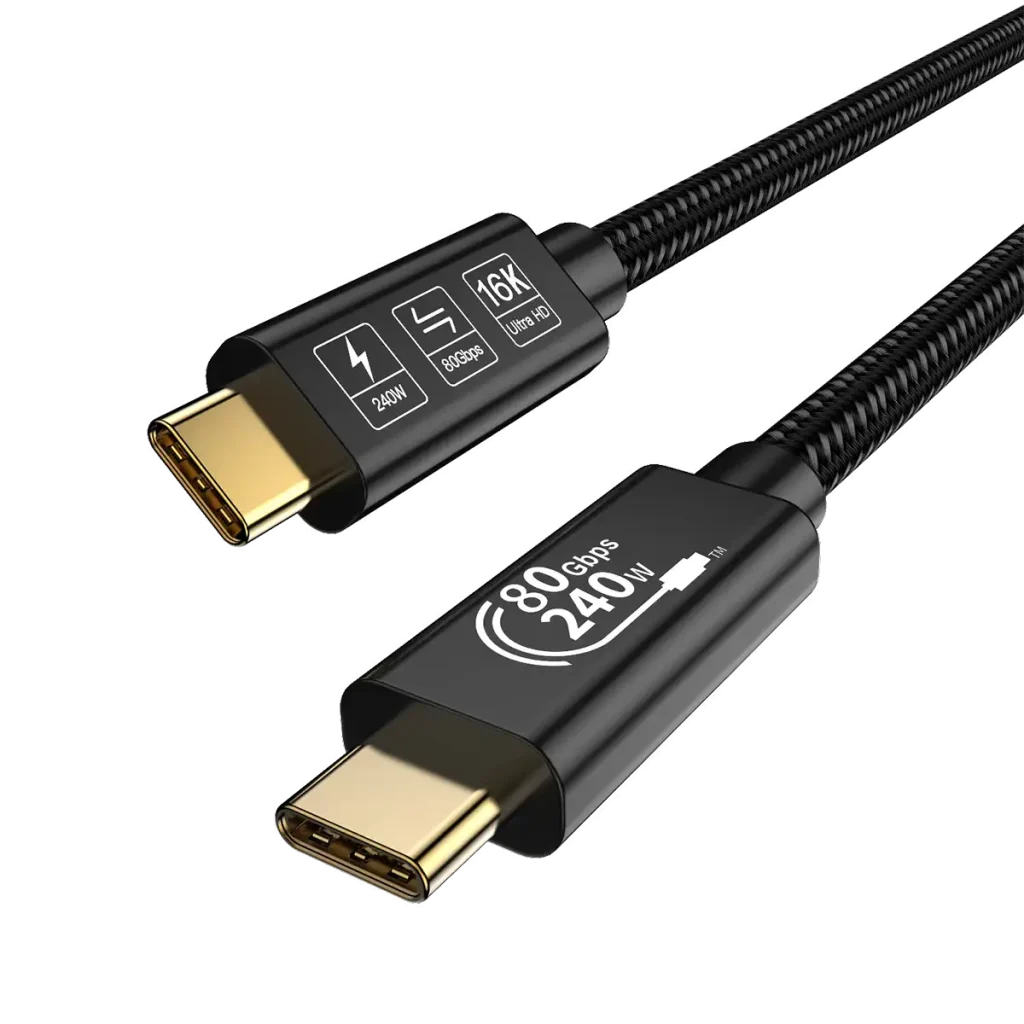
Every day, we plug in our phones to charge multiple times without a second thought. To most people, a phone charging cable is just a simple, cheap copper wire wrapped in plastic that you can buy for a few dollars.
But you might be surprised to learn that this tiny cable is actually packed with advanced tech! It features “muscles and nerves” made of complex internal wire cores, a miniature brain called an E-marker chip, and goes through more than a dozen highly precise industrial manufacturing steps before it reaches your hands.
In this article, we will tear down a mobile data cable in plain, easy-to-understand English. We’ll look at exactly what is inside, how it works, and how it is made.
1. The “Muscles and Nerves”: Internal Wire Cores
If you cut a charging cable horizontally, you will see a bundle of tiny, color-coded wires squeezed tightly inside. These data cable wire cores act as the essential highways for power and data.
[ Outer Jacket (TPE/Nylon) ] -> [ Metal Braid ] -> [ Aluminum Foil Shield ] -> [ Internal Wire Cores (VBUS/GND/Data/CC) ]
VBUS Core Power Line: The Cable’s “Heavy Muscles”
The Role: Main current transmission channel.
Plain English Explanation: Think of electricity as water. The VBUS power wire is the widest riverbed. When using 66W, 100W, or even 240W super-fast charging, all that heavy electrical current flows directly through this wire (or a set of them) into your phone.
Design Detail: To handle several amperes (A) of current without overheating, the VBUS wire core must be physically thicker than the other wires inside. It is typically made of high-quality tinned copper or bare copper to keep electrical resistance low and prevent the cable from getting hot.
GND Ground Wire: The “Safe Return Path”
The Role: Grounding wire (zero-potential reference).
Plain English Explanation: Electricity must always travel in a complete loop. While VBUS sends the electrical current to your phone, the GND ground wire acts as the return path to the charger. Together, they form a safe, closed electrical loop.
D+ and D- Signal Wires: The “Dynamic Twins”
The Role: USB 2.0 data transfer lines.
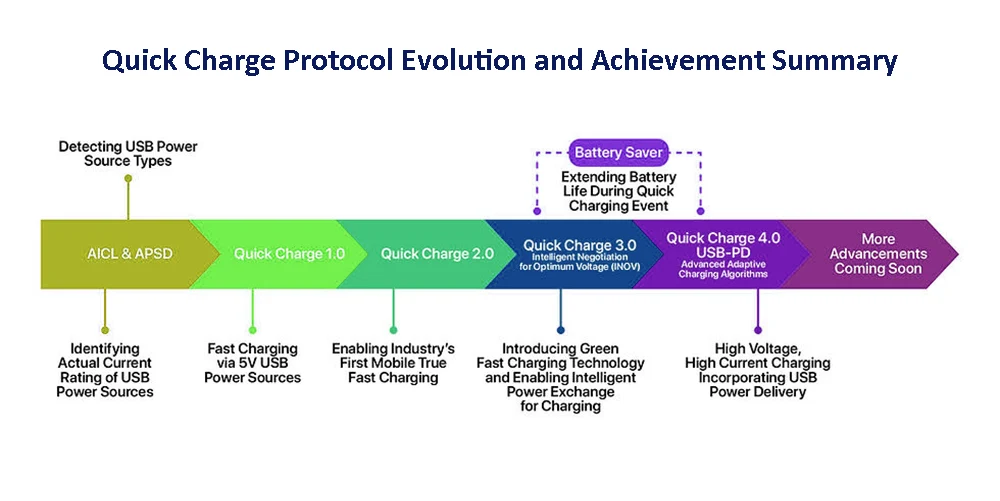
Plain English Explanation: These two wires are almost always twisted around each other. They handle data syncing, like transferring photos or music between your phone and a computer. In older fast-charging protocols (such as Quick Charge 2.0/3.0), they also helped the phone and charger “negotiate” fast charging by varying voltage levels.
CC Line (Configuration Channel): The “Diplomat”
The Role: Configuration Channel line (exclusive to USB Type-C cables).
Plain English Explanation: The CC line is the brain of the modern USB-C standard. It detects when a device is plugged in, determines the plug orientation, and manages the USB Power Delivery (USB PD) negotiations. It tells the charger and the phone exactly how much voltage and current are safe to use.
Tensile Anti-Pull Fiber (Kevlar/Aramid): The “Spine”
The Role: High-strength tension relief fiber.
Plain English Explanation: Ever wonder why some cables can withstand heavy tugs without snapping? It is because they have high-strength Kevlar or aramid fibers running right down the center of the wire bundle. They do not conduct electricity; their only job is to absorb physical tension and protect the delicate copper wires from breaking.
2. Copper Quality Matters: Wire Core Materials Compared
The speed, safety, and lifespan of a charging cable depend heavily on the copper wire material used inside. Here is how common wire materials stack up:
| Material | Conductivity | Durability | Cost | Typical Use Case |
|---|---|---|---|---|
| Bare Copper | Excellent | Poor (oxidizes easily) | Moderate | Standard inbox cables |
| Tinned Copper | Excellent | Outstanding (rust resistant) | Higher | Premium fast-charging cables |
| Silver Plated | Top-tier | Outstanding | Extremely high | Audiophile / high-speed data cables |
| CCA / CCS | Poor | Terrible | Extremely low | Ultra-cheap dollar store cables |
Tip: When buying a charging cable, always look for tinned copper wire cores. They offer excellent conductivity and are coated with a layer of tin that protects the copper from moisture and oxidation.
3. The “Hidden Brain”: Core Electronic Components
Modern charging cables are far from simple passive wires. Inside their slim connector heads lies a tiny printed circuit board (PCB) populated with micro-components.
E-marker Chip: The “Digital Passport”
What it is: Electronically Marked Cable chip.
Its Function: If a USB-C to USB-C cable supports power levels above 60W (currents higher than 3A), industry standards require it to have an E-marker chip inside. When you plug the cable into a charger and phone, the devices read this chip first: “Aha! This cable supports up to 20V/5A (100W). It is safe to trigger the highest charging speed!” Without this chip, fast charging is capped at a safe 60W limit.
Identification Resistor: The “Legacy Pass”
What it is: Typically a 56kΩ pull-up resistor.
Its Function: Found in USB-A to USB-C legacy cables, this resistor tells the USB-C device: “Hey, I am connected to a standard USB-A power source. Do not try to draw more than 5V/1.5A or 5V/3A, otherwise, you might burn out the charger!”
Protection Components (PTC / OVP)
Its Function: Safety guards. If the charger malfunctions and outputs dangerous voltage levels, or if moisture gets into the connector causing temperatures to spike, these miniature over-current, over-voltage, and over-temperature protection devices instantly cut the current to protect your phone from frying or catching fire.
4. The “Shield & Armor”: Shielding and Outer Jacket
Electricity and high-speed data flowing through wires are highly sensitive to outside electromagnetic interference (EMI)—like noise from Wi-Fi routers or microwaves. To prevent data corruption and charging instability, the inner cores are wrapped in robust protective layers:
-
Aluminum Foil Shield: Wrapped tightly around the inner wire bundle, this foil reflects and blocks high-frequency electromagnetic interference.
-
Metal Braid Shield: Woven from dozens of tiny tinned copper wires, this braid shields against low-frequency interference and drastically boosts the cable’s tensile strength and bending resistance.
-
Outer Jacket Material:
TPE (Thermoplastic Elastomer): Rubber-like, highly flexible, and smooth. This is the material Apple uses for its inbox cables (though it can degrade and crack over years of heavy use).
-
PVC (Polyvinyl Chloride): Stiff, cheap to produce, and highly durable, but less environmentally friendly.
-
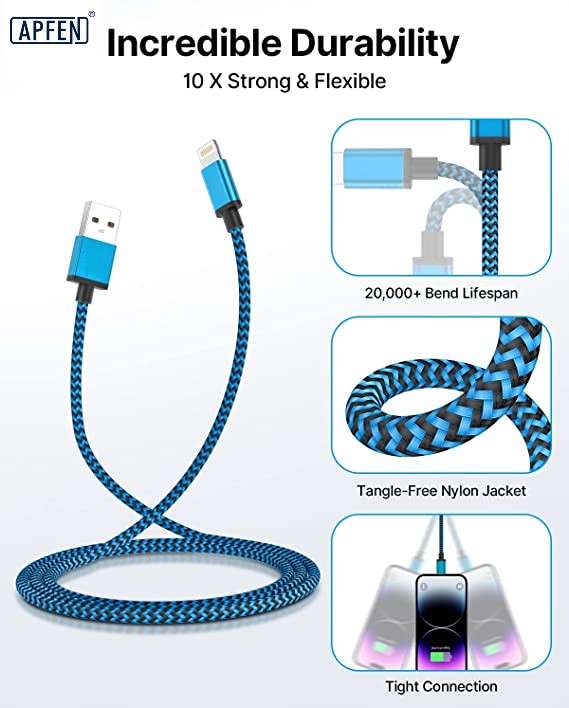
Nylon Braided: A woven nylon fabric sleeve wrapped around the cable. It is highly resistant to abrasion, pulling, and tangles, making it the gold standard for premium aftermarket cables.
-
5. Step-by-Step Cable Manufacturing Process
Bringing these components together requires a highly automated, multi-stage cable manufacturing process.
Step 1: Wire Drawing & Stranding
Drawing: Thicker copper rods are drawn through high-precision machines to reduce their diameter until they are thinner than a human hair.
Stranding: Multiple ultra-fine copper strands are twisted together like a rope. This increases the total conductive surface area while keeping the final wire incredibly flexible.
Insulation Extrusion: The stranded wires are fed through an extrusion machine that coats them with colorful, insulating plastic skins (red, black, green, white, etc.).
Step 2: Cabling & Shielding
The colored wire cores and Kevlar fibers are bundled together. The bundle is wrapped with aluminum foil, and a high-speed braiding machine weaves a protective metal braided sleeve over it.
Step 3: Precise Assembly & Molding
Laser Stripping: High-precision laser cutters strip away the outer jackets and internal insulation to expose the bright copper wires without damaging the delicate strands.
Laser Welding: The exposed copper wires are soldered onto the tiny PCB board inside the connector. Top-tier brands use automated laser welding machines to create perfect, low-resistance solder joints. Cheap cables are often hand-soldered, leaving them prone to loose connections.
[ Strip Insulation ] -> [ Laser Weld to PCB ] -> [ Inner Mold Injection ] -> [ Metal Shell Crimping ] -> [ Outer Mold Injection ]
Inner Mold Injection: The welded joint is placed into an injection molding machine where a hard plastic compound is molded directly over the PCB. This acts like a protective cast, ensuring the solder joints never flex or break when pulled.
Outer Mold & SR (Strain Relief) Design: The outer decorative shell (metal or TPE) is applied. This step forms the critical SR (Strain Relief) boot—the ribbed, flexible collar where the cable joins the connector. A well-engineered SR design distributes bending stress evenly to prevent the cable from breaking at its neck.
6. Torture Testing: Reliability Standards
Before a high-quality charging cable can be packaged and shipped, it must survive a battery of brutal laboratory tests:
-
Swing / Bending Test: The cable is loaded with a 500g weight and repeatedly bent back and forth at a 90-degree angle. Premium cables must endure 10,000+ bends without breaking or losing connection.
-
Mating Cycles Test: The connector is plugged in and unplugged from a port thousands of times. It must survive at least 10,000 cycles without the metal plug becoming loose or losing electrical contact.
-
Salt Spray Test: Connectors are placed in a highly corrosive salt-mist chamber for 24 to 48 hours to ensure the gold-plated or nickel-plated contacts do not rust, tarnish, or corrode.
-
Tensile Strength Test: The cable is pulled with immense mechanical force to ensure the inner cores and solder joints can handle accidental tugs without snapping.
Summary: How to Choose a Quality Cable?
Now that you know how a phone charging cable is built, here are the key takeaways for buying your next one:
Match your power: If you are using a charger higher than 60W, look for a USB-C to USB-C cable with a built-in E-marker chip.
Prioritize durability: Opt for double-braided nylon jackets with a long, reinforced SR strain relief design to prevent bending damage.
Inspect the specs: Look for cables that explicitly feature tinned copper wire cores and certifications from trusted, reputable brands to ensure your phone charges fast and remains safe!
USB cable.
Picture this: You’re sitting at your desk, engrossed in a project
Where Can I Buy a High-Quality Pd Fast Charging Cable?
FAQ
1 cable
USB-C cables certainly.
Share This Artcle:

Fast delivery
Fastest delivery within 22 days

Quick proofing
Fastest 3-day proofing cycle

After-sale protection
24-month long warranty

1V1Customer Service
Professional customer service follow-up
Lorem ipsum dolor sit amet, consectetur adipiscing elit. Ut elit tellus, luctus nec ullamcorper mattis, pulvinar dapibus leo.