
Nylon Braided vs. TPE vs. PVC USB-C Cables: Which Is Best for Wholesale Buyers?
For wholesale buyers, the best USB-C cable material depends on the target market, selling price, durability requirements, and product positioning. PVC cables are usually a cost-effective choice, TPE cables offer a flexible and soft-touch option, and nylon-braided cables provide a more premium appearance and added outer abrasion protection. The right choice depends on the complete cable construction, not just the jacket material.
What Is the Difference Between Nylon Braided, TPE, and PVC USB-C Cables?
Nylon braided, TPE, and PVC are not exactly the same type of material. PVC and TPE are commonly used as cable jacket or insulation materials, while nylon braiding is typically an additional textile layer wrapped around an underlying cable jacket.
This distinction matters when developing a USB-C cable product.
A nylon-braided cable may also use a PVC or TPE inner jacket. Therefore, a cable described as “nylon braided” does not necessarily use nylon as its primary electrical insulation material.
Here is a quick comparison:
| Feature | PVC USB-C Cable | TPE USB-C Cable | Nylon-Braided USB-C Cable |
|---|---|---|---|
| Main construction | Polymer jacket | Flexible elastomer jacket | Textile braid over an underlying jacket |
| Material cost | Generally low | Often moderate | Often higher due to additional materials and processing |
| Flexibility | Depends on formulation | Often soft and flexible | Depends on the inner jacket and braid construction |
| Outer abrasion resistance | Depends on formulation | Depends on formulation | Braid can provide additional abrasion protection |
| Surface feel | Usually smooth | Often soft-touch | Woven or textured |
| Premium appearance | Basic to standard | Modern and minimal | Premium and textured |
| Manufacturing complexity | Generally lower | Moderate, depending on formulation | Often higher |
| Custom colors | Available | Available | Available, subject to yarn and production options |
| Best-fit positioning | Value and mass-market products | Flexible everyday cables | Premium retail and branded products |
Important: These are general tendencies, not universal guarantees. Actual performance depends on material formulation, wall thickness, cable diameter, braid coverage, conductor construction, connector design, and quality control.
1. PVC USB-C Cables: Are They the Best Choice for Low-Cost Wholesale?
PVC, or polyvinyl chloride, is widely used in cable manufacturing because it can provide a practical balance of cost, processability, flexibility, and electrical insulation properties.
For wholesalers selling standard charging accessories, PVC can be a sensible starting point.
What Are the Advantages of PVC USB-C Cables?
1. Competitive manufacturing cost
PVC jackets can be economical for large production runs, depending on the formulation, cable structure, and manufacturing process.
This can help importers and distributors maintain competitive wholesale prices in markets where buyers are highly price-sensitive.
2. Smooth surface and simple appearance
PVC cables typically have a smooth outer surface. This suits basic charging cables, promotional products, and standard retail accessories.
3. Flexible product customization
Manufacturers can offer different cable lengths, colors, connector housings, and packaging options. PVC can also be formulated to meet different flexibility and application requirements.
4. Suitable for many everyday applications
A properly designed PVC USB-C cable can support everyday charging and data transfer when its conductors, connectors, and overall construction meet the required specifications.
What Are the Disadvantages of PVC Cables?
PVC quality varies significantly by formulation.
Some PVC cables can become stiff in cold conditions, while poorly formulated or poorly processed materials may crack, deform, or wear prematurely under demanding conditions.
Other considerations include:
Basic visual appeal compared with premium braided designs.
Performance differences between PVC formulations.
Environmental and chemical-compliance requirements.
Potential competition based mainly on price.
PVC is not automatically low quality. A well-designed PVC cable can outperform a poorly manufactured braided cable in specific durability tests.
Who Should Buy PVC USB-C Cables?
PVC cables are worth considering for:
Importers serving price-sensitive markets.
Wholesalers supplying general electronics accessories.
Distributors purchasing standard charging cables.
Promotional product companies.
Retailers selling entry-level accessories.
Brands that prioritize affordability and simple packaging.
Wholesale recommendation: Choose PVC when the target selling price is the main consideration, but do not reduce quality requirements for conductors, connectors, electrical performance, or safety.
2. TPE USB-C Cables: Are They Better for Flexibility and Everyday Use?
TPE stands for thermoplastic elastomer. It is a family of materials that combines elastomer-like flexibility with thermoplastic processing characteristics.
TPE is often used for cable jackets when manufacturers want a softer feel or a flexible product design.
What Are the Advantages of TPE USB-C Cables?
1. Soft and flexible feel
Many TPE formulations provide a smooth, flexible surface. This can make a cable comfortable to handle and convenient for everyday use.
However, flexibility depends on the specific TPE grade, hardness, wall thickness, and cable construction.
2. Good potential for repeated handling
A suitable TPE formulation can provide useful flexibility and resistance to repeated bending. Actual service life still depends on strain relief, conductor design, and the quality of the connector-to-cable transition.
3. Modern product appearance
TPE can work well for minimalist charging accessories, travel cables, and products positioned between entry-level PVC and premium braided designs.
4. Useful for OEM customization
Manufacturers can evaluate different TPE formulations, colors, surface finishes, and hardness levels to meet a brand’s product requirements.
What Are the Disadvantages of TPE Cables?
TPE is not one single material. Different formulations can vary in price, hardness, abrasion resistance, heat performance, and environmental properties.
Potential considerations include:
Material costs may be higher than those of some PVC formulations.
Some formulations can attract dust or develop surface marks.
Performance under heat, cold, oils, or chemicals varies by grade.
A soft jacket alone does not guarantee long-term bending durability.
Buyers should request the actual material specification and relevant test results rather than relying only on the term “TPE.”
Who Should Buy TPE USB-C Cables?
TPE cables may suit:
Consumer electronics brands.
Online retailers selling everyday charging accessories.
Private-label brands seeking a soft-touch product.
Travel accessory suppliers.
Buyers looking for an alternative to standard PVC cables.
Brands that want a simple, modern design without textile braiding.
Wholesale recommendation: TPE is a useful option when handling comfort and flexibility are important to the product positioning. Confirm the formulation and test performance for the intended environment.
3. Nylon-Braided USB-C Cables: Are They Worth the Higher Cost?
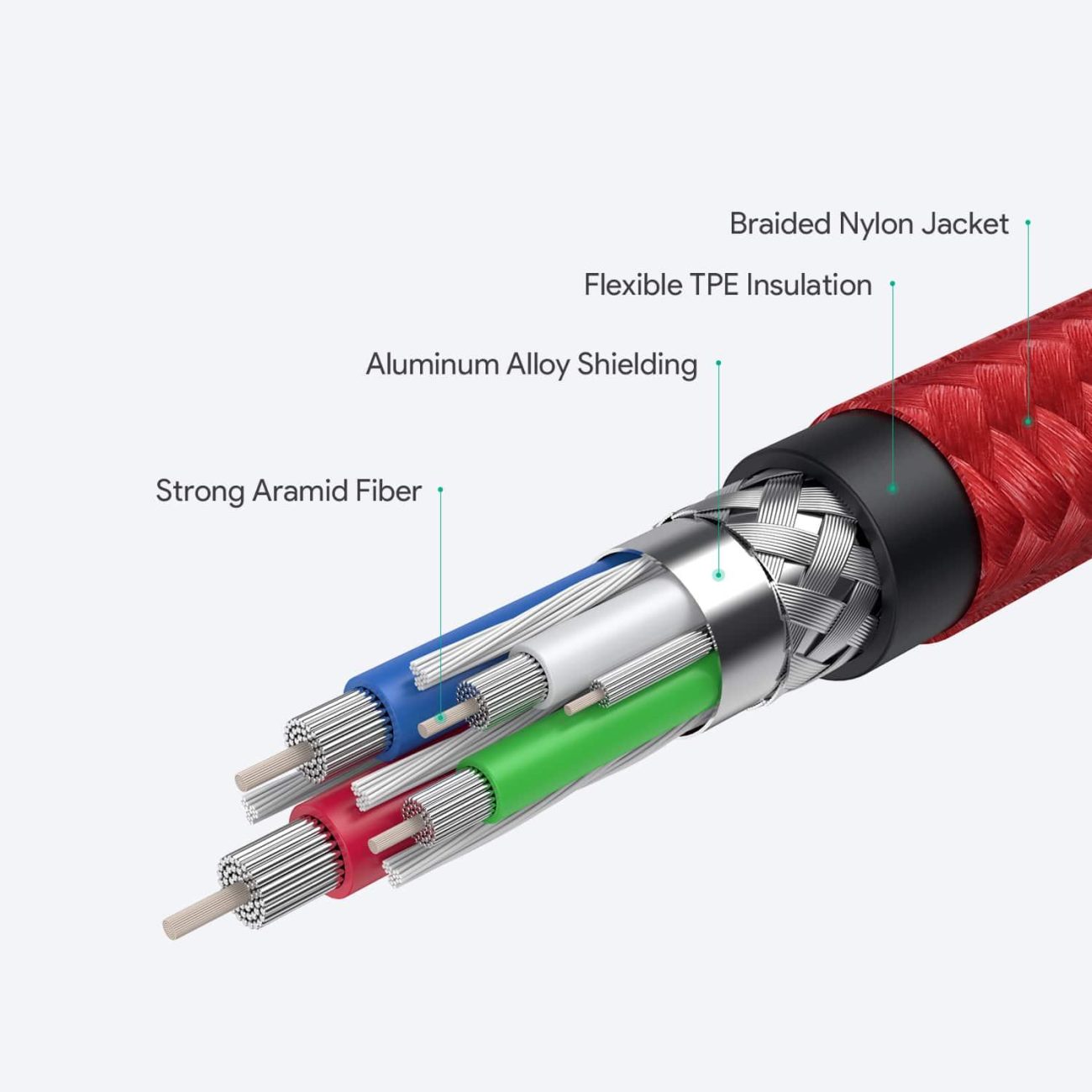
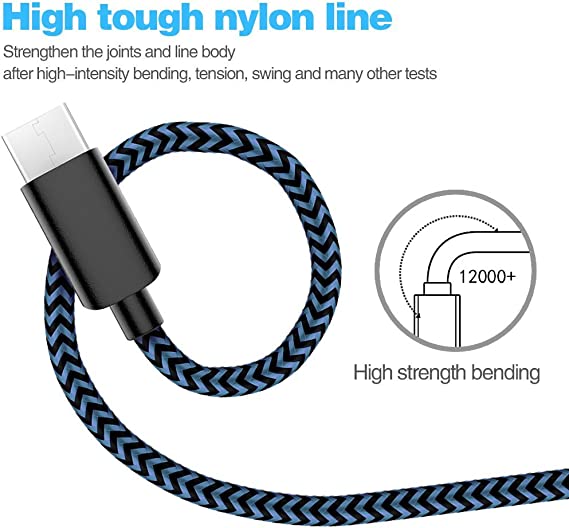
Nylon-braided USB-C cables usually have a textile layer woven around an underlying insulated cable. The braid adds texture and can help protect the underlying jacket against surface abrasion.
For many brands, braided cables also create a more premium visual impression.
What Are the Advantages of Nylon-Braided USB-C Cables?
1. Additional outer abrasion protection
The braid can help reduce direct wear on the underlying jacket when a cable is dragged across surfaces or repeatedly handled.
However, abrasion resistance depends on the yarn, braid coverage, weave structure, and underlying jacket. A braid does not make a cable indestructible.
2. Premium appearance
The woven surface can make a charging cable look more substantial and distinctive than a standard smooth-jacket cable.
This can help brands differentiate their products in online listings, retail displays, and accessory bundles.
3. More options for brand identity
Depending on factory capability, buyers may customize:
Braid colors.
Two-tone or multi-color patterns.
Connector housing colors.
Logo placement.
Cable length.
Retail packaging.
Surface texture and overall styling.
4. Suitable for premium accessory ranges
Braided cables can fit product lines positioned around design, durability, and a higher perceived value.
What Are the Disadvantages of Nylon-Braided Cables?
The additional textile layer can increase material and manufacturing costs. Braided cables may also have a larger outer diameter or a different bending feel compared with unbraided versions.
Other factors to evaluate include:
Potential fraying or damage to the braid.
Dirt retention between woven fibers.
Additional production steps.
Differences in flexibility between braid constructions.
The need to coordinate the braid with the inner jacket and strain relief.
A nylon-braided cable is not necessarily more electrically capable than a PVC or TPE cable. Its power and data performance still depend on the internal conductors, shielding, connectors, and overall design.
Who Should Buy Nylon-Braided USB-C Cables?
Nylon-braided cables are worth considering for:
Premium electronics brands.
Private-label charging accessory companies.
E-commerce sellers seeking visual differentiation.
Retailers selling mid-range and premium cables.
Distributors supplying gift sets or accessory bundles.
Brands targeting consumers who value both appearance and outer-jacket protection.
Wholesale recommendation: Choose nylon braiding when product differentiation and perceived value justify the additional cost. Validate the finished cable’s flexibility, abrasion resistance, and mechanical durability rather than assuming the braid guarantees a longer lifespan.
4. Which Cable Material Is Most Durable?
There is no universal winner. Durability is the result of the complete cable design, not just the material name.
For example, a well-constructed PVC cable with good strain relief may last longer in a particular bending test than a braided cable with weak terminations. A TPE cable may offer excellent flexibility but still fail if its internal conductors are damaged by repeated bending.
To compare products properly, evaluate the following factors.
Outer-Jacket Abrasion
The outer surface experiences friction when the cable is dragged, packed, or used on a desk.
Nylon braiding can provide an additional protective layer, while PVC and TPE rely on their own jacket properties. The actual result should be measured using a defined abrasion test.
Repeated Bending
Repeated bending can fatigue the conductors, damage insulation, and stress the connection near the plug.
Relevant factors include:
Conductor strand construction.
Cable diameter.
Jacket flexibility.
Strain-relief design.
Connector termination quality.
Tensile Strength
Pulling a cable can stress the conductors and connector assembly. A strong outer jacket does not automatically mean the internal connections can withstand high tensile loads.
Temperature Performance
PVC and TPE formulations have different operating-temperature ranges. Nylon braiding alone does not establish the temperature rating of the complete cable.
Buyers should confirm the manufacturer’s specified operating range and test evidence.
Connector and Strain-Relief Quality
Many cable failures occur near the connector because this area experiences repeated bending and pulling.
A robust design must coordinate the connector housing, cable jacket, internal conductors, and strain-relief structure.
For wholesale procurement, request test results for the finished cable instead of comparing material names alone.
5. Nylon Braided vs. TPE vs. PVC: Wholesale Cost Comparison
For B2B buyers, material choice directly affects product positioning and cost planning. However, exact price differences depend on copper prices, cable specifications, length, power rating, connector design, order quantity, and customization requirements.
| Purchasing Factor | PVC | TPE | Nylon-Braided |
|---|---|---|---|
| Cost positioning | Usually economical | Often mid-range | Often higher |
| Manufacturing process | Generally straightforward | Depends on formulation and extrusion | Additional braiding process |
| Visual differentiation | Limited to jacket and connector design | Smooth, modern finish | Strong textile appearance |
| Custom colors | Commonly available | Commonly available | Depends on yarn and braid options |
| Packaging potential | Standard retail or bulk | Standard retail or premium | Often suited to premium presentation |
| Price-sensitive wholesale | Strong fit | Possible | Depends on target price |
| Premium private label | Possible with good design | Good fit for minimalist products | Strong fit |
| Main evaluation point | Formulation and overall construction | Flexibility and formulation | Braid quality plus underlying cable construction |
How Should Buyers Compare Supplier Quotations?
Do not compare quotations based only on the material name.
A 1-meter PVC cable and a 2-meter braided cable with a different power rating are not directly comparable.
When requesting quotes, provide the same specifications to every supplier:
Cable type: USB-C to USB-C or another configuration.
Length.
Rated power.
Supported data speed.
Conductor material and wire gauge.
Jacket material and braid construction.
Connector design.
Testing requirements.
Branding and packaging.
Order quantity.
This makes supplier quotations easier to compare and reduces the risk of receiving products with different specifications.
6. Which Material Is Best for Different Wholesale Markets?
The best option depends on the buyer’s sales channel and target customer.
| Target Market | Suggested Starting Point | Reason |
|---|---|---|
| Low-cost wholesale | PVC | Can help meet competitive target prices |
| General electronics distributors | PVC or TPE | Balances practical use and cost |
| Online private-label brands | TPE or nylon-braided | Offers more options for product differentiation |
| Premium charging accessories | Nylon-braided | Textured surface and premium appearance |
| Travel and everyday accessories | TPE or braided | Choice depends on flexibility and abrasion requirements |
| Promotional products | PVC or TPE | Useful for cost-controlled customization |
| Multi-tier retail product lines | All three | Supports entry-level, standard, and premium options |
These are starting recommendations, not fixed rules. A market with strong price competition may still support braided cables, while a premium brand may choose TPE for a clean, minimalist design.
The key is to match the product specification to the target customer’s needs and expected selling price.
7. How Should Wholesale Buyers Evaluate USB-C Cable Quality?
Material selection is only one part of purchasing a reliable USB-C cable. The internal design and production controls matter just as much.
Check the Electrical Specification
Confirm:
Rated power and current capability.
Supported data rate.
Conductor resistance.
Voltage drop under load.
Connector contact quality.
USB Power Delivery compatibility, where applicable.
High-speed signal integrity, where applicable.
A USB-C connector does not automatically mean that a cable supports fast charging, high-speed data, or video output.
Check the Mechanical Specification
Ask the supplier how the finished cable is evaluated for:
Repeated bending.
Connector insertion and extraction.
Tensile strength.
Strain-relief performance.
Outer-jacket abrasion.
Connector retention.
Test methods and pass criteria should be defined for the intended product.
Check Compliance and Documentation
Depending on the destination market and product claims, buyers may need to evaluate:
RoHS documentation.
REACH-related documentation.
Applicable electrical and material safety requirements.
USB-IF compliance or certification information, where relevant.
These requirements are not interchangeable. For example, a material-compliance declaration does not establish that a cable supports a particular USB data rate.
Buyers should request documentation relevant to the exact product model and its intended market.
8. Can Manufacturers Customize PVC, TPE, and Nylon-Braided USB-C Cables?
Yes. Depending on the factory’s equipment and production capabilities, USB-C cables can be customized for different markets and brands.
Common OEM/ODM Customization Options
Cable construction
PVC or TPE jacket.
Nylon-braided outer layer.
Different cable diameters.
Different conductor gauges.
Different shielding structures.
Connector design
USB-C to USB-C.
USB-A to USB-C.
Other connector combinations supported by the intended device and application.
Customized connector housing and overmolding.
Appearance
Standard or custom colors.
Two-tone braid patterns.
Logo on the connector housing.
Custom packaging and labels.
Technical specifications
Cable length.
Power capability.
Data rate.
Electrical and mechanical test requirements.
Not every combination is suitable for every application. The manufacturer should validate the complete design before mass production.
What Should You Include in an OEM Inquiry?
| Specification | Example |
|---|---|
| Cable type | USB-C to USB-C |
| Length | 1 m / 2 m |
| Power requirement | Defined target wattage |
| Data requirement | USB 2 or specified higher-speed standard |
| Outer construction | PVC / TPE / nylon braid |
| Conductor | Specified material and AWG |
| Color | Standard or custom |
| Branding | Logo and packaging |
| Testing | Defined electrical and mechanical requirements |
| Quantity | Estimated order volume |
Providing these details helps the manufacturer quote a product that matches your target market rather than a generic cable with an unclear specification.
Expert Quality Inspector: “When comparing PVC, TPE, and nylon-braided USB-C cables, we never judge quality by the jacket alone. We also evaluate conductor resistance, connector termination, strain relief, flexibility, and the required electrical and mechanical tests. A premium-looking cable still needs a verified technical specification.”
9. Common Mistakes When Choosing USB-C Cable Materials
Mistake 1: Assuming Nylon Braiding Always Means Better Quality
Nylon braiding can improve outer abrasion protection and appearance, but it cannot compensate for weak conductors, poor connector assembly, or inadequate strain relief.
Mistake 2: Assuming TPE Is Always More Flexible Than PVC
Flexibility varies by material grade, hardness, temperature, and construction. Compare the finished products rather than relying on the material name.
Mistake 3: Choosing PVC Only Because It Is Cheaper
A low unit price may not deliver the best commercial outcome if the product has poor consistency, higher defect rates, or excessive after-sales costs.
Mistake 4: Ignoring the Internal Cable Design
Conductor size, insulation, shielding, and termination quality affect electrical performance and reliability. The outer jacket alone does not determine charging speed.
Mistake 5: Ordering Without a Defined Test Standard
Terms such as “durable,” “fast charging,” and “premium quality” are too vague for technical procurement. Specify measurable requirements and agree on the relevant test methods before production.
FAQ: Nylon Braided vs. TPE vs. PVC USB-C Cables
1. Is a nylon-braided USB-C cable better than a PVC cable?
Not in every respect. Nylon braiding can provide additional outer abrasion protection and a premium appearance, while PVC is often more economical. The better choice depends on the complete cable construction, target price, and intended use.
2. Is TPE better than PVC for USB-C charging cables?
TPE can offer a soft, flexible feel, while PVC can provide a cost-effective and practical jacket solution. Neither material is automatically superior. Buyers should compare the specific formulations, flexibility, temperature performance, and durability of the finished cable.
3. Do nylon-braided USB-C cables support faster charging?
No, not simply because they are braided. Charging performance depends on the cable’s electrical design, rated power capability, connectors, charger, and device. A properly specified PVC or TPE cable can support the same charging power as a braided cable when both are designed and validated for that application.
4. Which USB-C cable material is best for wholesale buyers?
PVC is a useful starting point for price-sensitive markets, TPE suits products where soft-touch flexibility is important, and nylon-braided construction can help differentiate premium products. Wholesale buyers should select based on target price, customer expectations, technical requirements, and verified quality.
Conclusion
Choosing between nylon-braided, TPE, and PVC USB-C cables is a business decision as much as a material decision.
PVC is often suitable for cost-conscious wholesale programs. TPE can offer a flexible, modern feel. Nylon braiding can provide additional outer abrasion protection and stronger visual differentiation for premium product lines.
For wholesalers, importers, distributors, and private-label brands, the most reliable approach is to define the target market first, specify the required charging and data performance, and then compare the materials and construction options that meet those requirements.
The best USB-C cable is not necessarily the most expensive one. It is the cable whose verified performance, construction, appearance, and cost match the needs of your customers.
USB cable.
Picture this: You’re sitting at your desk, engrossed in a project
Where Can I Buy a High-Quality Pd Fast Charging Cable?
FAQ
1 cable
USB-C cables certainly.
Share This Artcle:

Fast delivery
Fastest delivery within 22 days

Quick proofing
Fastest 3-day proofing cycle

After-sale protection
24-month long warranty

1V1Customer Service
Professional customer service follow-up
Lorem ipsum dolor sit amet, consectetur adipiscing elit. Ut elit tellus, luctus nec ullamcorper mattis, pulvinar dapibus leo.