
24 AWG vs 28 AWG Wire Gauge: Choosing the Right Power Wires for OEM Fast Charging Cables
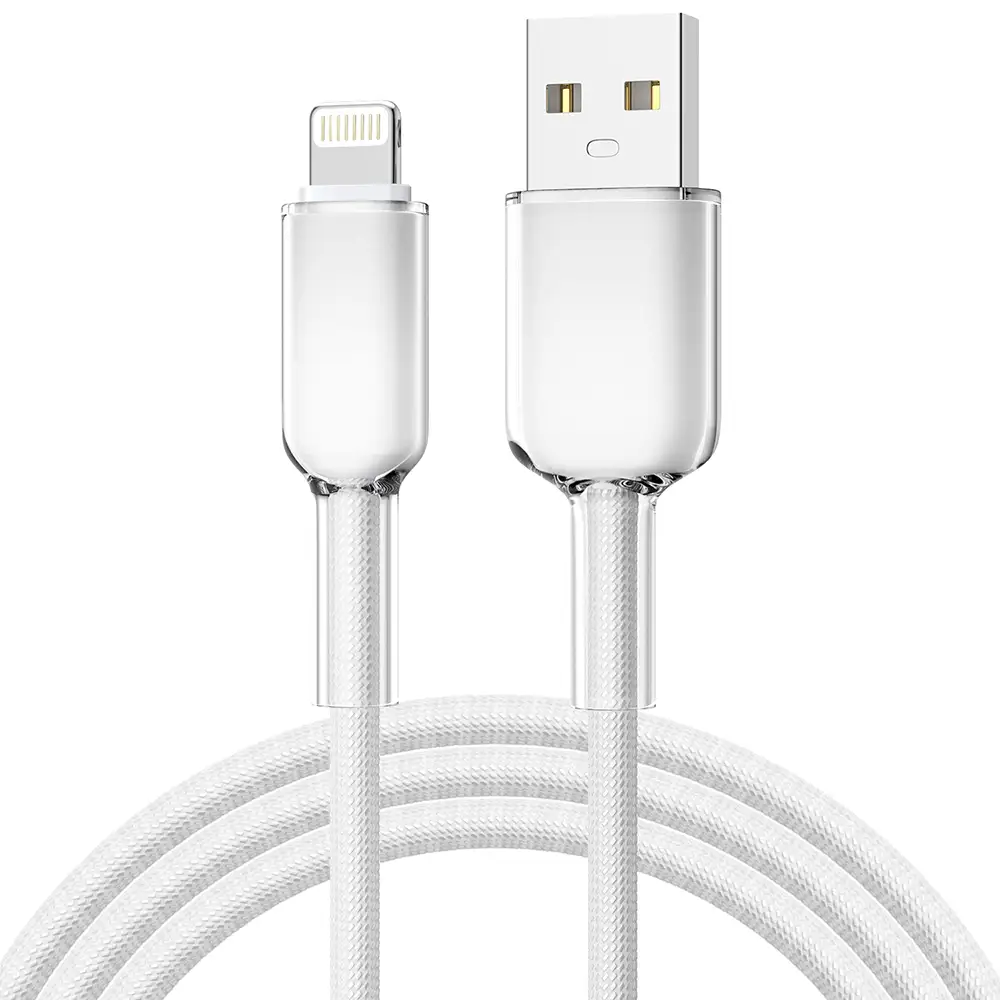
24 AWG wire is thicker than 28 AWG and is generally the better choice for OEM fast charging cables because it carries higher current with lower resistance, less voltage drop, and lower heat generation. However, the best wire gauge depends on the cable’s power rating, length, flexibility, and intended application.
Why Does AWG Matter in OEM Fast Charging Cables?
What Does AWG Mean?
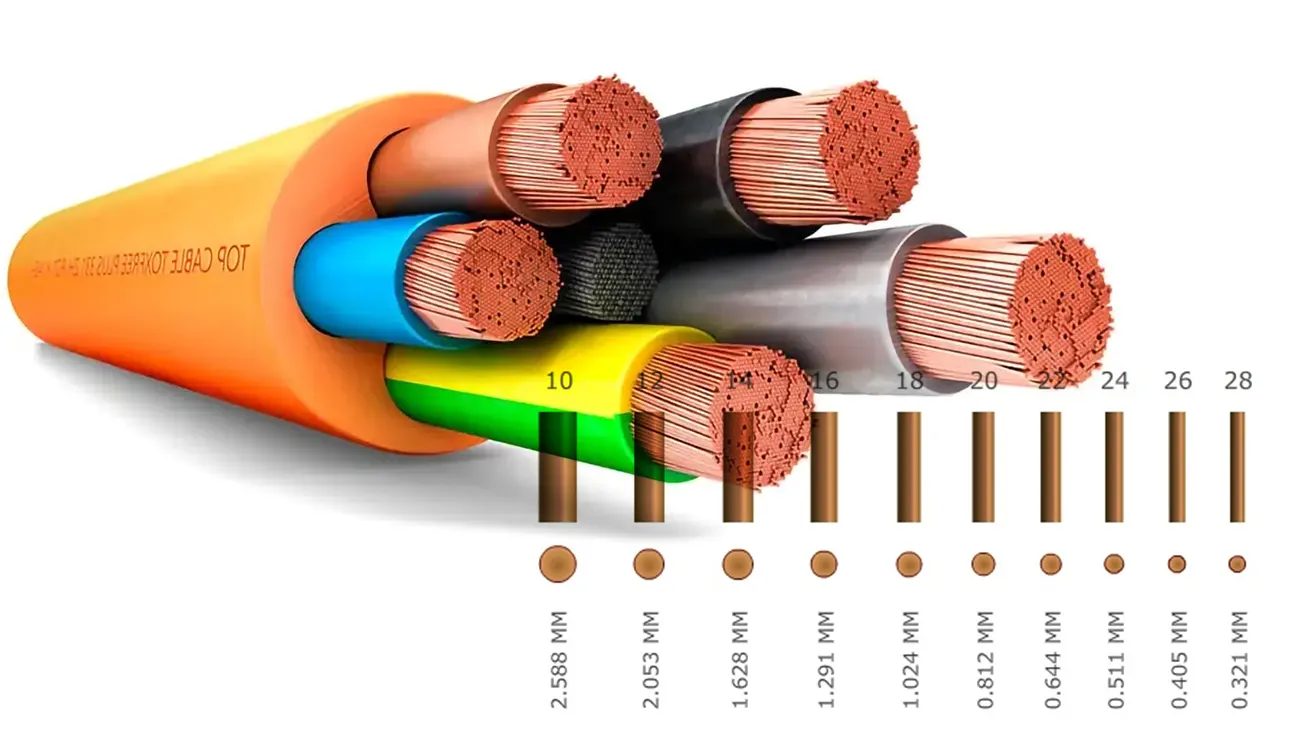
AWG (American Wire Gauge) is the standard system used to measure the diameter of electrical conductors.
The AWG number works opposite to what many buyers expect:
Lower AWG number = Thicker wire
Higher AWG number = Thinner wire
For USB charging cables, conductor size directly affects:
Charging speed
Voltage drop
Cable resistance
Heat generation
Overall efficiency
Product lifespan
For OEM manufacturers, selecting the correct AWG is one of the most important engineering decisions during cable design.
What Is the Difference Between 24 AWG and 28 AWG?
How Do the Two Wire Sizes Compare?
Although the difference appears small, 24 AWG has a significantly larger conductor cross-sectional area than 28 AWG.
| Specification | 24 AWG | 28 AWG |
|---|---|---|
| Approximate Conductor Diameter | 0.51 mm | 0.32 mm |
| Cross-Sectional Area | ~0.205 mm² | ~0.081 mm² |
| DC Resistance (20°C) | ~84 Ω/km | ~213 Ω/km |
| Current Capacity (Typical Cable Design)* | Up to 3A–5A | Around 1A–2A |
| Voltage Drop | Lower | Higher |
| Heat Generation | Lower | Higher |
| Flexibility | Slightly Lower | Higher |
| Typical Applications | Fast charging cables | Standard charging cables |
*Actual current capability depends on insulation, cable construction, ambient temperature, and applicable safety standards.
The larger conductor size of 24 AWG allows electricity to flow with less resistance, making it better suited for high-current USB charging.
Why Is 24 AWG Better for Fast Charging?
How Does Wire Resistance Affect Charging Performance?
Electrical resistance converts part of the charging energy into heat.
A cable with higher resistance experiences:
More voltage loss
Reduced charging efficiency
Higher operating temperature
Lower charging power at the device
Because 24 AWG has approximately 60% lower resistance than 28 AWG, it delivers power more efficiently over the same cable length.
For OEM cable manufacturers, lower resistance helps maintain stable voltage during high-current charging.
Can 28 AWG Still Be Used?
When Is 28 AWG the Right Choice?
Yes.
Although 28 AWG is not ideal for high-power charging, it remains suitable for many products.
Typical applications include:
USB 2.0 charging cables
Low-power accessories
Bluetooth headphones
Wireless keyboards
Computer mice
Small consumer electronics
Advantages include:
Lower material cost
Smaller cable diameter
Better flexibility
Lighter weight
If the charging current remains around 1A–2A, 28 AWG may provide sufficient performance.
Which Wire Gauge Supports USB Fast Charging?
What AWG Is Recommended for Different Power Levels?
The appropriate wire gauge depends on the cable’s maximum current and charging protocol.
| USB Cable Type | Typical Current | Recommended Power Wire |
|---|---|---|
| Standard USB Charging | 1A–2A | 28 AWG |
| Fast Charging Cable | Up to 3A | 24–26 AWG |
| USB PD 60W Cable | 3A | 24–26 AWG |
| USB PD 100W Cable | 5A | 22–24 AWG |
| USB PD 3.1 EPR 240W Cable | 5A (48V) | 20–22 AWG |
For cables supporting USB Power Delivery (PD) 3.0 or USB PD 3.1 EPR, thicker conductors are recommended to reduce resistance and improve thermal performance.
How Does Cable Length Influence Wire Gauge Selection?
Does a Longer Cable Need a Thicker Wire?
Yes.
Longer cables naturally have higher electrical resistance.
For example:
A 0.5-meter charging cable may perform well with 26 AWG.
A 2-meter cable carrying the same current may require 24 AWG or even 22 AWG to maintain acceptable voltage at the device.
OEM manufacturers often increase conductor size as cable length increases to compensate for additional resistance.
Is Pure Copper More Important Than AWG?
Does Material Quality Matter?
Absolutely.
Wire gauge is only one part of cable performance.
The conductor material also plays a major role.
| Conductor Material | Advantages | Disadvantages |
|---|---|---|
| Pure Copper | Low resistance, excellent conductivity, long service life | Higher cost |
| Copper-Clad Aluminum (CCA) | Lower cost, lighter weight | Higher resistance, reduced current capacity |
A 24 AWG CCA conductor may perform worse than a 26 AWG pure copper conductor in some applications.
Professional OEM manufacturers generally recommend pure oxygen-free copper for premium fast charging cables.
How Does Wire Gauge Affect USB Power Delivery?
Why Is AWG Important for USB PD 3.0 and PD 3.1?
USB Power Delivery allows devices to negotiate higher charging power.
Examples include:
| USB PD Standard | Maximum Power | Maximum Current |
|---|---|---|
| USB PD 2.0 | 100W | 5A |
| USB PD 3.0 | 100W | 5A |
| USB PD 3.1 EPR | 240W | 5A |
Higher current requires:
Lower conductor resistance
Better thermal performance
Stable voltage delivery
Most 100W USB-C cables use 22–24 AWG power conductors together with an E-Marker IC to support 5A charging safely.
Using 28 AWG conductors in a high-power cable would significantly increase voltage drop and heat generation.
How Do Manufacturers Verify Wire Gauge Quality?
What Quality Tests Should OEM Cable Factories Perform?
Professional cable manufacturers verify conductor quality before and during production.
Common tests include:
Incoming Material Inspection (IQC)
Checks include:
Wire diameter
Copper purity
Insulation thickness
Conductor resistance
Electrical Testing
Typical inspections include:
Continuity testing
Resistance measurement
Voltage drop testing
Current carrying capability
Mechanical Testing
Manufacturers also evaluate:
Tensile strength
Flexibility
Bending resistance
Connector pull force
These inspections help ensure consistent cable performance in mass production.
What Manufacturing Standards Should Buyers Look For?
Which Certifications Indicate Reliable Cable Production?
A qualified OEM cable manufacturer should follow internationally recognized standards.
Common certifications include:
| Certification | Purpose |
|---|---|
| ISO9001 | Quality management system |
| RoHS | Restricts hazardous substances |
| REACH | Chemical compliance |
| UL Recognized Components / UL Cable Certification | Electrical safety |
| USB-IF Compliance | USB specification verification |
Factories should also maintain documented quality systems, including:
IQC (Incoming Quality Control)
IPQC (In-Process Quality Control)
OQC (Outgoing Quality Control)
Why Does the Soldering Process Matter?
What Is SAC305 Lead-Free Solder?
Premium USB charging cables typically use SAC305 lead-free solder.
Typical composition:
Tin (Sn): 96.5%
Silver (Ag): 3.0%
Copper (Cu): 0.5%
Typical processing temperatures:
Melting point: approximately 217°C
Reflow temperature: 240–260°C
Combined with correctly sized conductors, high-quality solder joints reduce electrical resistance and improve long-term reliability.
Quality Inspector’s Advice:
“Never choose wire gauge based only on cost. Check conductor material, actual resistance, cable length, charging protocol, and electrical test reports. A correctly engineered cable delivers stable power throughout its service life.”
How Should OEM Buyers Choose Between 24 AWG and 28 AWG?
What Questions Should You Ask Before Ordering?
Before approving an OEM cable design, ask the manufacturer:
Product Design
Is the conductor pure copper or CCA?
What AWG is used for power wires?
What AWG is used for data wires?
Charging Performance
What is the maximum supported current?
Does the cable support USB PD 3.0 or USB PD 3.1?
Is an E-Marker IC included for 5A cables?
Quality Assurance
Is the factory ISO9001 certified?
Can resistance and voltage drop reports be provided?
Is every production batch electrically tested?
These questions help ensure that the selected wire gauge matches the intended application and performance requirements.
Conclusion
Choosing between 24 AWG and 28 AWG is not simply a matter of cable thickness. It directly affects charging efficiency, voltage stability, thermal performance, and product reliability.
For most OEM fast charging projects:
24 AWG is the preferred choice for 3A fast charging, USB PD 60W, and many 100W USB-C cable designs because of its lower resistance and better current-carrying capability.
28 AWG remains suitable for low-power charging and compact consumer electronics where flexibility and cost are priorities.
When evaluating suppliers, buyers should consider not only AWG size but also conductor material, USB Power Delivery compatibility, ISO9001 quality management, compliance certifications, and comprehensive electrical testing.
FAQ
1. Is 24 AWG better than 28 AWG for USB fast charging?
Yes. 24 AWG has lower resistance and supports higher current, making it better suited for fast charging and USB Power Delivery applications.
2. Can a 28 AWG cable support 100W charging?
Generally, no. Most 100W USB-C cables require thicker power conductors, typically 22–24 AWG, along with an E-Marker IC to support 5A charging safely.
3. Does a thicker wire always mean a better USB cable?
Not necessarily. A thicker wire reduces resistance, but overall cable quality also depends on conductor material, connector design, shielding, solder quality, and manufacturing control.
4. Should OEM buyers specify AWG in cable quotations?
Yes. AWG should be clearly defined in OEM specifications because it directly affects charging performance, voltage drop, production cost, and compliance with the intended power rating.
USB cable.
Picture this: You’re sitting at your desk, engrossed in a project
Where Can I Buy a High-Quality Pd Fast Charging Cable?
FAQ
1 cable
USB-C cables certainly.
Share This Artcle:

Fast delivery
Fastest delivery within 22 days

Quick proofing
Fastest 3-day proofing cycle

After-sale protection
24-month long warranty

1V1Customer Service
Professional customer service follow-up
Lorem ipsum dolor sit amet, consectetur adipiscing elit. Ut elit tellus, luctus nec ullamcorper mattis, pulvinar dapibus leo.