
USB-C Cable Quality Control Checklist for Importers and Wholesalers
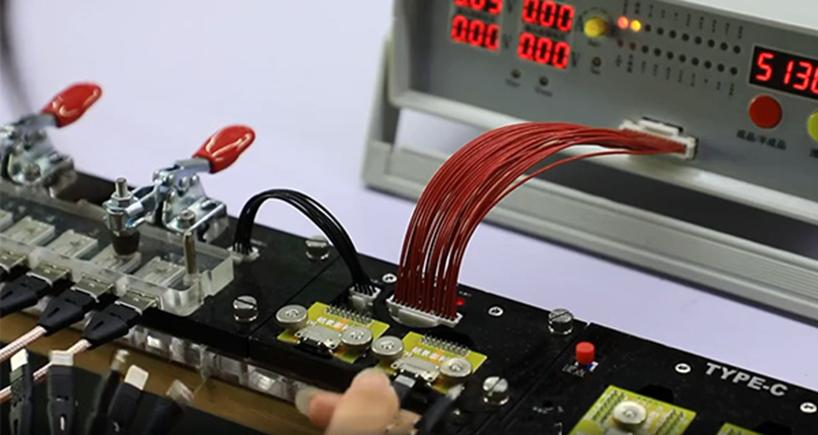
A reliable USB-C cable quality control checklist should cover product specifications, connector quality, charging performance, data transfer, durability, safety, packaging, and batch consistency. Importers and wholesalers should inspect samples before mass production, verify the finished goods before shipment, and agree on written acceptance criteria with the supplier.
Why Is Quality Control Important When Buying USB-C Cables in Bulk?
For importers, wholesalers, distributors, and private-label brands, a low purchase price does not always mean a low total cost. Poor-quality USB-C cables can lead to customer complaints, product returns, warranty costs, and damage to brand reputation.
Common quality problems include:
Cables that charge slowly or disconnect unexpectedly.
Connectors that become loose after repeated use.
Cable jackets that crack, peel, or wear prematurely.
Incorrect power or data-transfer performance claims.
Inconsistent product quality between production batches.
Packaging, labeling, or specifications that do not match the order.
A structured USB-C cable quality control checklist helps buyers identify these risks before the goods reach their customers.
Quality control should not rely on appearance alone. A cable may look well-made but still have excessive electrical resistance, weak mechanical strength, or performance that does not match its advertised specifications.
1. USB-C Cable Quality Control Checklist: Product Specifications
Before testing samples, confirm exactly what you are purchasing. The supplier and buyer should agree on a written product specification.
What Should Buyers Confirm?
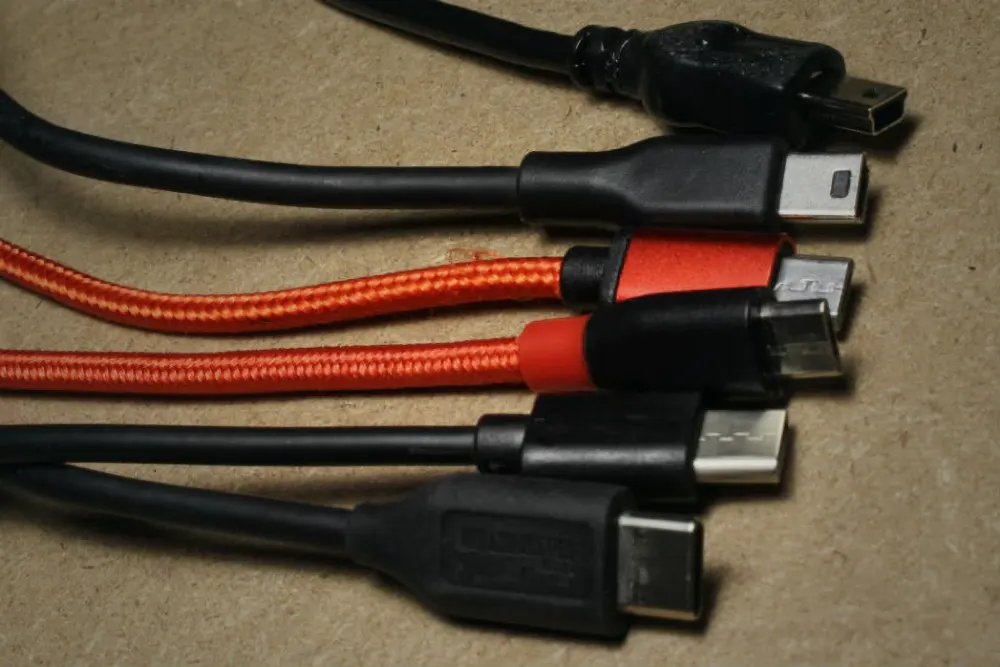
Connector type: USB-C to USB-C, USB-A to USB-C, or another specified configuration.
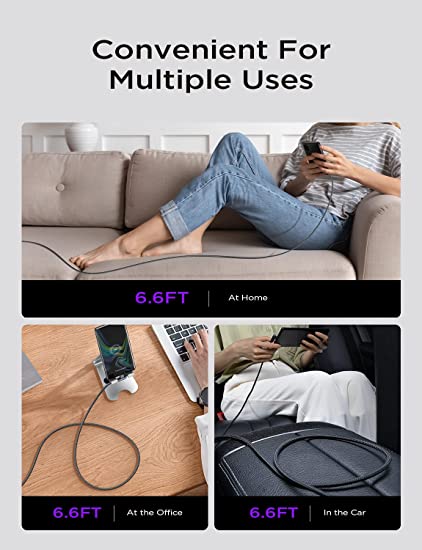
Cable length: For example, 0.5 m, 1 m, 1.5 m, or 2 m.
Power rating: Confirm the supported voltage, current, and maximum power under the intended operating conditions.
Data-transfer speed: Specify USB 2.0, USB 5Gbps, USB 10Gbps, USB 20Gbps, USB4, or the exact supported capability, as applicable.
Wire construction: Confirm conductor materials, wire gauge, and other relevant construction details.
Jacket material: PVC, TPE, nylon-braided construction, or another agreed design.
Connector design: Confirm the plug housing, finish, dimensions, and strain-relief design.
Customization: Confirm colors, logo placement, cable markings, and packaging.
Compliance requirements: Identify the applicable market requirements, product standards, and any required third-party certifications.
Remember that a USB-C connector does not automatically mean the cable supports high-speed data transfer, high-power charging, or every USB-C feature. The cable’s actual capabilities must match its specification.
2. USB-C Cable Quality Control Checklist for Inspection
Use the following checklist when evaluating samples or inspecting a finished production batch.
| Checkpoint | What to inspect | Acceptance criteria |
|---|---|---|
| Product specifications | Connector type, length, power, and data rating | Matches the approved specification |
| Appearance | Scratches, stains, cracks, and molding defects | No defects outside agreed limits |
| Connector quality | Plug dimensions, housing, and mechanical fit | Meets the applicable specification |
| Connector retention | Insertion and extraction performance | Within agreed limits |
| Cable construction | Jacket, braiding, and visible assembly defects | Matches the approved sample |
| Electrical continuity | Power, ground, and applicable signal paths | Passes the specified test |
| Electrical resistance | Conductor and connection resistance | Meets the agreed electrical limits |
| Charging performance | Supported voltage, current, and power | Meets the advertised product rating |
| Data performance | Transfer speed and signal performance, where applicable | Meets the specified capability |
| Durability | Flexing, pull, abrasion, and mating-cycle tests, as applicable | Passes the defined test procedure |
| Safety and compliance | Required documentation, markings, and test evidence | Meets applicable market and product requirements |
| Packaging | Quantity, labels, barcodes, and protection | Matches the approved packaging specification |
| Batch consistency | Comparison of samples from the production lot | Meets the agreed sampling and acceptance plan |
The exact test methods and limits depend on the cable design, rated performance, destination market, and applicable standards. Buyers should document these details rather than using the same limits for every cable model.
3. How to Check USB-C Connector Quality
The connector is one of the most important parts of a charging cable. Poor connector quality can cause intermittent charging, unstable data connections, and premature product failure.
Visual Inspection
Check both ends of the cable for:
Deformed or uneven metal shells.
Cracks, gaps, or poor overmolding.
Loose connector housings.
Exposed conductors or damaged insulation.
Inconsistent molding or finishing.Incorrect logo placement or connector orientation.
Connector Retention Test
A connector should fit securely without requiring excessive insertion force. A connection that is too loose may disconnect easily, while one that is too tight can make normal use difficult or potentially damage the mating port.
For more reliable results, use a suitable fixture to measure insertion and extraction force. Repeat the measurements after the specified mating cycles to check whether the retention performance has changed.
Strain-Relief Inspection
The strain-relief area protects the cable where it exits the connector housing.
Check whether the cable moves excessively inside the housing, whether the overmold separates, and whether bending causes cracks or electrical interruptions.
For more details, see our related article: Why Do USB-C Cable Connectors Become Loose? Causes and Quality Checks.
4. How to Test USB-C Cable Charging Performance
Charging performance is a key purchasing factor for USB-C cables, particularly those sold for smartphones, tablets, laptops, and other power-hungry devices.
Confirm the Actual Power Rating
Do not judge a cable’s power capability by its connector size, thickness, or appearance.
Ask the supplier to confirm the cable’s supported voltage, current, and maximum power. For USB Power Delivery applications, verify that the cable construction and any required electronic identification features are appropriate for the intended power rating.
For example, a cable intended for 60W charging and one designed for up to 240W should not be treated as interchangeable without checking their specifications and compliance requirements.
Perform a Charging Test
Use suitable equipment to verify that the cable supports the required operating conditions.
Check the following:
The cable connects and charges consistently.
The expected voltage and current can be achieved with a compatible charger and device or test setup.
The cable does not exhibit unexpected interruptions.
Electrical resistance and temperature rise remain within the applicable limits.
The cable meets its declared power capability under the specified conditions.
A charging test should use a known-good power source, compatible equipment, and a documented procedure. A phone displaying a charging icon is not sufficient evidence that a cable meets a high-power rating.
5. How to Check USB-C Cable Data Transfer Speed
A USB-C cable can support charging without supporting every high-speed data feature associated with USB-C devices.
For this reason, data performance must be checked separately whenever the product is marketed for data transfer.
What Should Buyers Test?
- Confirm the advertised data-transfer standard.
- Use a compatible host, device, and test fixture.
- Verify that the cable supports the required data connection and performance.
- Check for disconnections, transmission errors, or inconsistent results.
- Request additional signal-integrity testing when required by the cable’s specification or certification program.
For basic USB 2.0 charging and data cables, the required checks may differ substantially from those for high-speed USB 3.2 or USB4 cables.
The USB Implementers Forum publishes the applicable specifications and compliance resources. Buyers can refer to the USB-IF Cable and Connector resources when defining requirements for a particular product.
6. How to Test USB-C Cable Durability
Durability testing helps determine whether a cable can withstand normal handling and repeated use.
For wholesale purchasing, the test plan should reflect the intended market. A low-cost promotional cable and a premium braided laptop cable may need different mechanical performance targets.
Recommended Durability Checks
Bending and flexing test
Repeatedly bend the cable under controlled conditions, especially near the connector. Inspect for cracks, broken conductors, and intermittent connections.
Cable pull test
Apply the specified axial load to evaluate whether the cable separates from the connector or suffers internal damage.
Abrasion test
Assess whether the outer jacket or braid resists wear under the defined test conditions.
Connector mating-cycle test
Repeat insertion and extraction to check whether connector retention and function remain acceptable.
Electrical test after mechanical testing
Recheck continuity and relevant functional performance after durability testing. A cable can pass a visual inspection but fail electrically after repeated bending.
There is no single cycle count that is appropriate for every USB-C cable. The supplier and buyer should agree on the method, test conditions, cycle count, and acceptance criteria before production.
For a step-by-step guide, read How to Test USB-C Cable Durability Before Bulk Purchasing.
7. What Safety and Compliance Documents Should Importers Request?
Compliance requirements depend on the product design, destination market, intended use, and any claims made by the seller. Importers should identify the requirements that actually apply to their shipment rather than requesting certificates without checking their relevance.
Ask the supplier for the applicable documents, such as:
Relevant product test reports.
USB-IF compliance or certification evidence, when applicable or required by the purchasing specification.
Material declarations or test evidence for applicable restricted substances.
Required declarations of conformity and market-specific documentation.
Traceable model numbers and identification that match the supplied goods.
Understand What Each Document Proves
A quality management certificate, such as ISO 9001, relates to an organization’s quality management system. It does not, by itself, prove that a specific USB-C cable meets every electrical, durability, or performance requirement.
Likewise, material compliance evidence does not automatically establish USB-C electrical performance or mechanical durability.
The USB-IF’s official compliance resources explain the relevant cable and connector compliance programs. Check the exact product category, specification, and certification status before relying on a supplier’s claims.
8. How to Inspect USB-C Cable Packaging and Labels
Packaging errors can cause problems even when the cable itself passes testing.
Before approving a bulk shipment, check:
Correct product model and SKU.
Accurate cable length and connector description.
Correct power and data-transfer claims.
Correct logo, color, and private-label artwork.
Required product markings and warnings.
Barcode and carton-label accuracy.
Quantity per retail box and master carton.
Protection against moisture, crushing, and transport damage, as appropriate.
If the cable is sold with claims such as 100W, 240W, or a particular data rate, those claims should match the approved product specification and supporting evidence.
For USB-C to USB-C cables seeking USB-IF compliance, review the applicable cable marking requirements and logo usage rules. Do not apply USB-IF certification logos without the appropriate authorization.
9. When Should Importers Perform Quality Inspections?
Quality control should happen at several stages instead of waiting until the goods are ready to ship.
| Stage | Recommended checks | Purpose |
|---|---|---|
| Supplier evaluation | Specifications, production capability, and test records | Assess whether the supplier can meet requirements |
| Sample approval | Appearance, charging, data, and selected durability tests | Confirm the proposed design |
| Pre-production approval | Components, materials, packaging, and production-equivalent sample | Confirm readiness for mass production |
| During production | Selected in-process checks and defect monitoring | Identify problems before the entire batch is finished |
| Pre-shipment inspection | Random sampling, functional checks, packaging, and quantity | Verify the finished order against the agreed requirements |
| After-sales monitoring | Returns, complaints, and failure analysis | Improve future orders and identify recurring defects |
For large orders or products with stricter reliability requirements, buyers may arrange independent inspection or laboratory testing.
10. How Many USB-C Cable Samples Should Buyers Inspect?
The appropriate sample size depends on order quantity, product risk, inspection cost, and the sampling plan agreed by the buyer and supplier.
For an initial order, buyers can begin with engineering samples and a production-equivalent sample. Before shipment, use a documented sampling method that defines the number of units to inspect and the acceptable defect levels.
For example, a buyer might inspect a selected sample from each production lot for appearance and packaging, while using a smaller, defined number of units for more time-consuming destructive or durability tests.
Do not use a convenient sample count as a universal quality standard. For formal lot acceptance, an established sampling plan, such as an applicable AQL-based plan, should specify the inspection level, sample size, defect classification, and acceptance/rejection numbers.
Critical defects, major defects, and minor cosmetic defects should be classified before inspection. A failed critical safety or electrical requirement should not be treated as an ordinary cosmetic defect.
11. Common USB-C Cable Quality Control Mistakes
Mistake 1: Choosing a Supplier Based Only on Price
A low quotation does not prove that the cable meets the required specifications. Compare product construction, test evidence, warranty terms, and quality controls as well as unit price.
Mistake 2: Testing Only Charging Function
A cable that charges a phone may still fail data-transfer, durability, or high-power requirements. Test each capability that is advertised or included in the purchase specification.
Mistake 3: Approving a Sample Without Confirming Production Consistency
A prototype may use different components or tighter process controls than the mass-produced goods. Confirm that the approved sample represents the actual production design and materials.
Mistake 4: Accepting General Certificates Without Checking Scope
Check the issuing organization, product model, test scope, validity where applicable, and whether the evidence covers the intended market and use.
Mistake 5: Leaving Quality Requirements Unwritten
If the purchase order does not define product specifications and acceptance criteria, disputes can arise when the buyer and supplier interpret “good quality” differently.
Mistake 6: Skipping Pre-Shipment Inspection
Even an experienced supplier can have a production issue. A defined inspection before shipment helps catch labeling, quantity, appearance, and selected functional problems before delivery.
QC Inspector’s Note: “A reliable cable is not approved because it looks good or charges one phone. We verify the agreed specifications, test the functions the customer will rely on, record the results, and check that the finished batch matches the approved sample.”
12. USB-C Cable Quality Control Checklist: Final Buyer Review
Before confirming a bulk order or authorizing shipment, use this final review.
Product model, connector types, and length match the order.
Power and data-transfer capabilities are documented.
Materials, wire construction, color, and branding match the approved sample.
Connector appearance and retention meet the agreed requirements.
Electrical continuity and resistance tests pass.
Charging performance meets the specified rating.
Data performance is verified when applicable.
Required durability tests have been completed.
Applicable compliance documents and test reports have been reviewed.
Packaging, labels, barcodes, and carton quantities are correct.
Batch sampling and acceptance criteria are documented.
Defects, corrective actions, and inspection records are traceable.
The production batch is approved before shipment.
Frequently Asked Questions
What is the most important quality test for USB-C cables?
There is no single test that covers every quality risk. For a charging cable, electrical continuity, resistance, charging performance, connector quality, and relevant durability tests are important. For a high-speed data cable, data performance and applicable signal-integrity checks are also necessary.
How can importers verify a USB-C cable supplier?
Review the supplier’s product specifications, production capabilities, quality control procedures, relevant test reports, and batch traceability. Approve a production-equivalent sample and verify the actual order against written acceptance criteria.
Does a USB-C cable need USB-IF certification?
Not every cable has the same certification requirements. Whether certification is needed depends on the product, intended claims, purchasing requirements, and applicable program. Buyers should verify the specific product’s compliance status and avoid treating a general certificate as proof of every performance claim.
What should a USB-C cable inspection report include?
A useful report identifies the supplier, product model, production lot, inspection date, sample size, test methods, acceptance criteria, results, defect classifications, and final decision. Attach relevant photos and test records where appropriate.
Conclusion
A practical USB-C cable quality control checklist for importers and wholesalers should cover specifications, connectors, electrical performance, charging, data transfer, durability, compliance, packaging, and production consistency.
The best time to prevent a quality problem is before mass production, but pre-shipment inspection remains important. By setting measurable acceptance criteria, approving a representative sample, and documenting the results, buyers can reduce avoidable returns and make more confident bulk purchasing decisions.
For wholesalers, distributors, and private-label brands, a supplier’s ability to demonstrate consistent quality is just as important as its quoted unit price.
USB cable.
Picture this: You’re sitting at your desk, engrossed in a project
Where Can I Buy a High-Quality Pd Fast Charging Cable?
FAQ
1 cable
USB-C cables certainly.
Share This Artcle:



Fast delivery
Fastest delivery within 22 days

Quick proofing
Fastest 3-day proofing cycle

After-sale protection
24-month long warranty

1V1Customer Service
Professional customer service follow-up
Lorem ipsum dolor sit amet, consectetur adipiscing elit. Ut elit tellus, luctus nec ullamcorper mattis, pulvinar dapibus leo.