
TPE vs. Nylon Braided vs. PVC: Material Comparison for Custom USB Cable Manufacturing
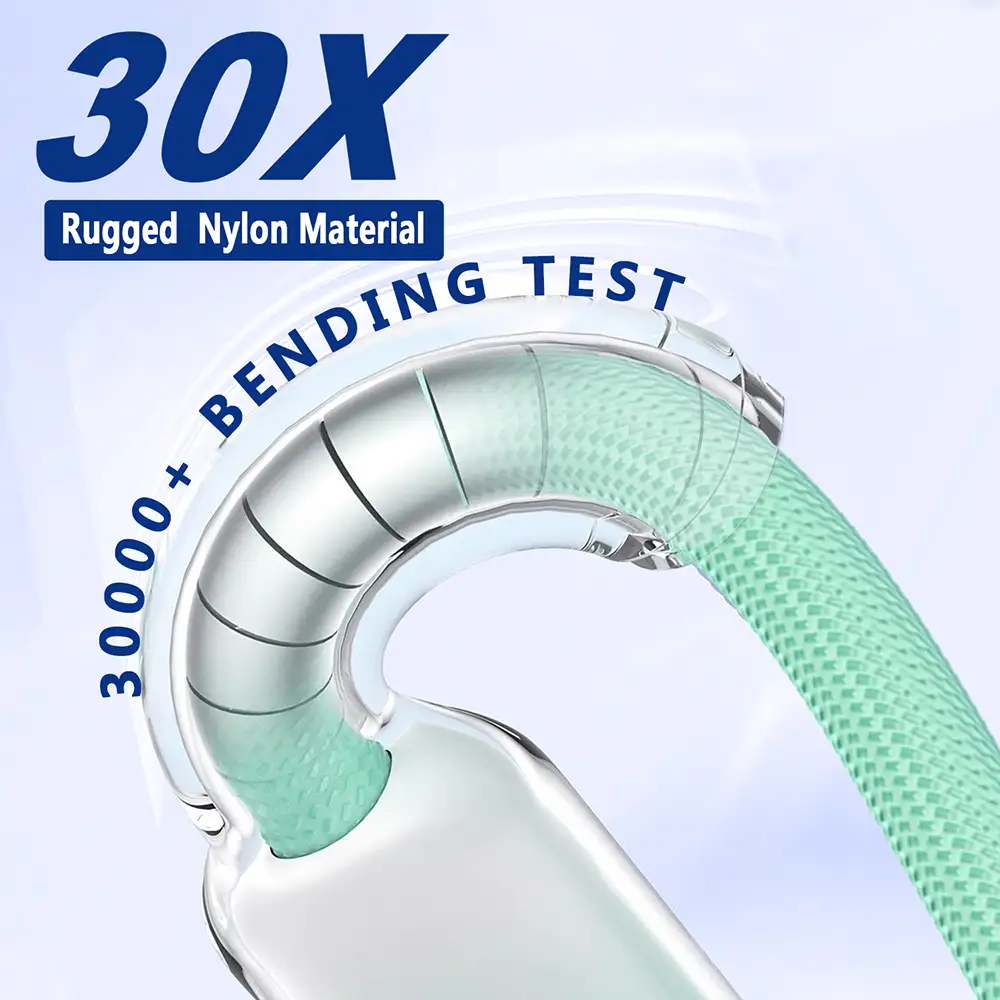
TPE, nylon braided, and PVC are the three most common jacket materials used in USB cable manufacturing. TPE offers flexibility, PVC provides cost efficiency, and nylon braided cables deliver the best abrasion resistance and durability. The right choice depends on your product positioning, target market, and OEM requirements.
Why Does USB Cable Jacket Material Matter?
How Does the Outer Jacket Affect Cable Performance?
The outer jacket is more than just a protective covering. It directly influences a cable’s durability, flexibility, appearance, production cost, and customer experience.
For OEM USB cable manufacturers, selecting the correct jacket material affects:
Product lifespan
Flexibility
Bend resistance
Wear resistance
Manufacturing efficiency
Environmental compliance
Retail positioning
Choosing the right material early in product development helps reduce warranty claims and improve customer satisfaction.
What Is PVC?
Why Is PVC the Most Common USB Cable Material?
PVC (Polyvinyl Chloride) has been the standard jacket material for USB cables for many years because it offers a good balance of cost, durability, and manufacturing efficiency.
Typical characteristics include:
Low production cost
Good electrical insulation
Stable mechanical strength
Easy injection molding
Wide color selection
PVC is commonly used in:
Charging cables
Consumer electronics
Promotional products
OEM accessories
Retail USB cables
However, PVC becomes less flexible in cold environments and may harden over time with repeated bending.
What Is TPE?
Why Is TPE Becoming More Popular?
TPE (Thermoplastic Elastomer) combines the flexibility of rubber with the processing efficiency of thermoplastics.
Compared with PVC, TPE generally offers:
Softer surface
Better flexibility
Improved cold-weather performance
Better touch feel
Lower risk of permanent cable deformation
Many premium smartphone accessories use TPE because users appreciate its smooth texture and flexibility.
Typical applications include:
Premium charging cables
Mobile phone accessories
Consumer electronics
Medical electronics
Wearable devices
What Is a Nylon Braided USB Cable?
Why Do Premium Brands Choose Nylon Braiding?
A nylon braided cable is not made entirely from nylon.
Instead, it typically consists of:
Internal conductors
Insulation layer
PVC or TPE inner jacket
External woven nylon braid
The braided layer provides additional mechanical protection.
Advantages include:
Excellent abrasion resistance
Improved tensile strength
Better resistance to daily wear
Premium appearance
Reduced cable tangling
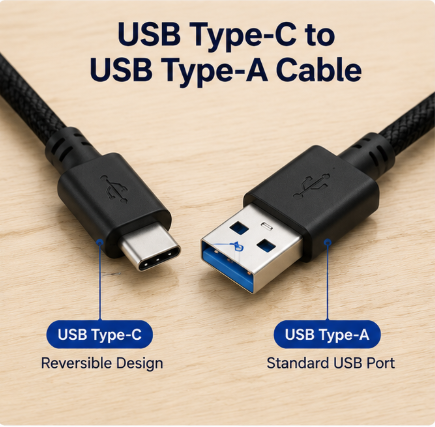
Many premium USB-C charging cables use braided construction because it combines durability with an attractive finish.
How Do TPE, Nylon Braided, and PVC Compare?
Which Material Is Best for OEM Projects?
Each material offers different advantages depending on the intended application.
| Feature | PVC | TPE | Nylon Braided |
|---|---|---|---|
| Cost | Low | Medium | High |
| Flexibility | Good | Excellent | Good |
| Soft Touch | Moderate | Excellent | Moderate |
| Abrasion Resistance | Moderate | Good | Excellent |
| Bend Resistance | Good | Excellent | Excellent |
| Tangle Resistance | Moderate | Good | Excellent |
| Appearance | Standard | Premium | Premium |
| Manufacturing Complexity | Low | Medium | High |
| Typical Market | Entry-level | Mid-range | Premium |
No single material is ideal for every product. The selection should align with the product’s target market and performance goals.
Which Material Lasts the Longest?
Which Jacket Has the Best Durability?
From a mechanical perspective, nylon braided cables generally offer the highest resistance to external damage.
Typical durability ranking:
- Nylon Braided
- TPE
- PVC
However, cable lifespan depends on many factors, including:
Conductor quality
Connector reinforcement
Strain relief design
Manufacturing process
User handling
A well-designed PVC cable may outperform a poorly manufactured braided cable.
Which Material Is Best for Fast Charging USB Cables?
Does Jacket Material Affect Charging Speed?
Not directly.
Charging performance is primarily determined by:
Copper conductor quality
AWG wire gauge
Connector design
Contact resistance
USB Power Delivery (USB PD) compatibility
However, jacket material influences heat dissipation, flexibility, and long-term reliability.
Typical conductor recommendations include:
| Cable Rating | Typical Power Wire Gauge |
|---|---|
| Standard Charging | 26–28 AWG |
| USB PD 60W | 24–26 AWG |
| USB PD 100W | 22–24 AWG |
| USB PD 3.1 240W | 20–22 AWG |
Premium braided and TPE cables are often paired with thicker conductors because they are designed for higher-performance products.
Which Material Is Better for OEM Branding?
Which Jacket Creates a More Premium Product?
Different markets have different expectations.
PVC
Suitable for:
Promotional giveaways
Budget retail products
High-volume distribution
TPE
Suitable for:
Smartphone accessories
Consumer electronics
Mid-range retail products
Eco-conscious brands
Nylon Braided
Suitable for:
Premium accessories
Gaming products
Laptop charging cables
Professional electronics
Enterprise branding
Many OEM customers choose braided cables because the woven surface improves perceived product quality.
What Manufacturing Standards Should Buyers Verify?
How Can You Evaluate a Reliable USB Cable Factory?
Professional USB cable manufacturers follow internationally recognized quality management systems.
ISO9001 Quality Management System
An ISO9001-certified factory controls:
Supplier qualification
Raw material inspection
Production documentation
Process traceability
Corrective actions
Final inspection
Quality systems generally include:
IQC (Incoming Quality Control)
IPQC (In-Process Quality Control)
OQC (Outgoing Quality Control)
These procedures improve production consistency and reduce defects.
Why Is Lead-Free Solder Important?
What Is SAC305?
Professional USB cable factories commonly use SAC305 lead-free solder.
Typical composition:
Tin (Sn): 96.5%
Silver (Ag): 3.0%
Copper (Cu): 0.5%
Typical processing temperatures:
Melting point: approximately 217°C
Reflow temperature: 240–260°C
Reliable solder joints reduce contact resistance and improve long-term durability.
What Certifications Should OEM Buyers Request?
Which Compliance Documents Are Important?
Before approving a supplier, buyers should verify compliance documentation.
| Certification | Purpose |
|---|---|
| ISO9001 | Quality management system |
| RoHS | Restricts hazardous substances |
| REACH | Chemical compliance |
| UL Recognized Components / UL Cable Certification | Electrical safety |
| USB-IF Compliance (where applicable) | USB specification verification |
Buyers should also request:
Material specifications
Cable bending test reports
Tensile strength reports
Environmental compliance documents
Quality Inspector’s Advice:
“Do not select a cable jacket based only on appearance or cost. Review bend testing, abrasion resistance, strain relief design, conductor quality, and quality control records. The outer material should match the cable’s intended use and expected service life.”
How Should Businesses Choose the Right USB Cable Material?
What Questions Should OEM Buyers Ask Suppliers?
Before finalizing a custom USB cable project, ask:
Product Design
Which jacket material is recommended for the target market?
What is the expected bend life?
Can custom colors or textures be produced?
Manufacturing
Is the factory ISO9001 certified?
What quality inspections are performed?
Are raw materials traceable?
Product Quality
Are abrasion and tensile tests available?
What conductor material and AWG size are used?
Can compliance reports be provided?
Choosing the right material early in the design process helps balance cost, durability, appearance, and long-term product performance.
Conclusion
PVC, TPE, and nylon braided materials each serve different purposes in USB cable manufacturing.
PVC is the most economical option and is ideal for high-volume, cost-sensitive products.
TPE provides greater flexibility, a softer feel, and improved user experience, making it suitable for premium consumer electronics.
Nylon braided construction delivers the highest abrasion resistance, premium appearance, and mechanical durability, making it the preferred choice for high-end USB charging and data cables.
For OEM and ODM buyers, the best material depends on the product’s positioning, expected usage, durability requirements, and budget. Working with an experienced manufacturer that follows ISO9001 quality management and provides comprehensive testing and compliance documentation helps ensure consistent product quality.
FAQ
1. Which material is best for USB charging cables?
There is no universal best choice. PVC is cost-effective, TPE offers excellent flexibility, and nylon braided construction provides superior durability. The right material depends on the product’s intended application and price point.
2. Does a nylon braided cable charge faster than a PVC cable?
No. Charging speed depends on factors such as conductor material, AWG wire gauge, connector quality, and USB Power Delivery support. The outer jacket mainly affects durability and user experience.
3. Is TPE more environmentally friendly than PVC?
TPE is often considered a more environmentally favorable option because it can be easier to recycle in certain manufacturing processes and typically contains fewer additives. Actual environmental performance depends on the specific material formulation and local recycling capabilities.
4. What should OEM buyers verify when choosing USB cable materials?
Buyers should review the jacket material, conductor specifications, AWG wire gauge, bend and abrasion test results, ISO9001 certification, RoHS and REACH compliance, and the manufacturer’s overall quality control process before placing bulk orders.
USB cable.
Picture this: You’re sitting at your desk, engrossed in a project
Where Can I Buy a High-Quality Pd Fast Charging Cable?
FAQ
1 cable
USB-C cables certainly.
Share This Artcle:

Fast delivery
Fastest delivery within 22 days

Quick proofing
Fastest 3-day proofing cycle

After-sale protection
24-month long warranty

1V1Customer Service
Professional customer service follow-up
Lorem ipsum dolor sit amet, consectetur adipiscing elit. Ut elit tellus, luctus nec ullamcorper mattis, pulvinar dapibus leo.