
Seamless One-Piece vs. Two-Piece Split USB-C Connectors: Durability & Manufacturing Differences
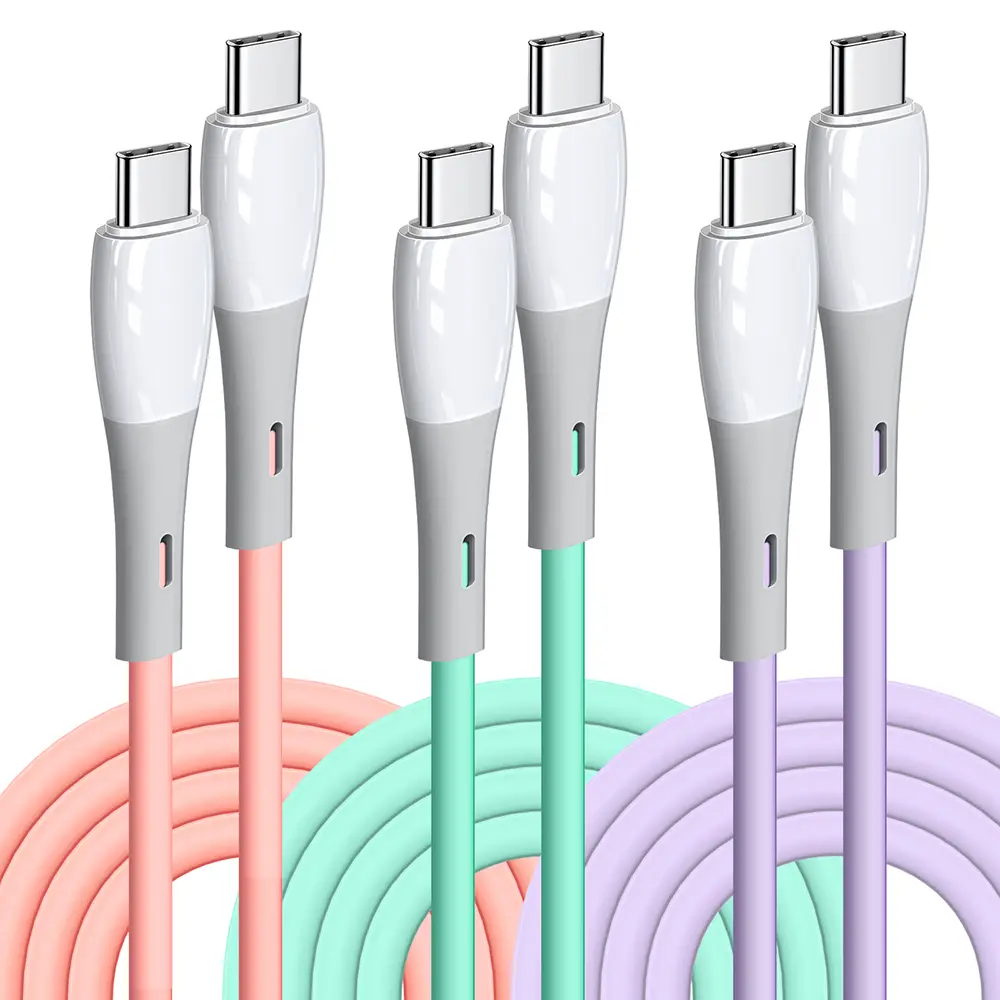
Seamless one-piece USB-C connectors generally provide better structural strength, improved appearance, and greater long-term durability than two-piece split connectors. However, two-piece connectors remain a cost-effective solution for many standard charging cables and OEM applications.
Why Does USB-C Connector Construction Matter?
Is the Connector Housing Important?
Yes.
While buyers often focus on charging speed or data transfer rates, the connector housing plays a major role in a cable’s overall reliability.
The connector must withstand:
Thousands of insertion and removal cycles
Daily bending and twisting
Pulling forces
Impact during transportation
Continuous electrical contact
A poorly constructed connector can fail even if the internal conductors and electronics are of high quality.
For OEM buyers, connector construction directly affects product lifespan, warranty costs, and customer satisfaction.
What Is a Seamless One-Piece USB-C Connector?
How Is It Manufactured?
A seamless one-piece USB-C connector is manufactured from a single metal shell, typically through precision stamping and forming processes.
Unlike split-shell designs, there is no visible joint around the connector housing.
Typical manufacturing steps include:
Precision metal stamping
Progressive die forming
CNC trimming (for some premium models)
Nickel or stainless steel plating
Automated assembly
Laser inspection
The result is a connector with a smooth, integrated appearance and fewer structural weak points.
What Is a Two-Piece Split USB-C Connector?
Why Is It Still Widely Used?
A two-piece split connector consists of an upper shell and a lower shell that are assembled together around the connector core.
This construction remains common because it offers:
Lower manufacturing cost
Simpler tooling
Faster production
Easier assembly
Wide supplier availability
Most entry-level and mid-range USB charging cables use this design successfully.
When produced under strict quality control, two-piece connectors can still provide reliable performance for everyday applications.
What Are the Main Differences Between One-Piece and Two-Piece Connectors?
Which Design Performs Better?
The following comparison highlights the key differences.
| Feature | Seamless One-Piece | Two-Piece Split |
|---|---|---|
| Housing Structure | Single-piece metal shell | Two assembled shell halves |
| Appearance | Smooth, premium | Visible seam |
| Structural Strength | Excellent | Good |
| Resistance to Deformation | Higher | Moderate |
| Manufacturing Complexity | Higher | Lower |
| Tooling Cost | Higher | Lower |
| Assembly Process | More precise | Simpler |
| Production Cost | Higher | Lower |
| Typical Applications | Premium cables, industrial products | Consumer charging cables, OEM accessories |
For premium USB-C products, seamless connectors often provide a stronger visual impression and improved mechanical performance.
Does Connector Construction Affect Durability?
Which Connector Lasts Longer?
The connector housing contributes significantly to mechanical durability.
A seamless one-piece shell typically provides:
Higher resistance to crushing
Better protection against deformation
Improved connector rigidity
Reduced risk of shell separation
However, durability also depends on:
Connector design
Material thickness
Internal terminal support
Strain relief
Manufacturing precision
Many premium USB-C connectors are tested for 10,000 to 20,000 insertion and removal cycles, consistent with the durability expectations defined in the USB Type-C specification.
Does Connector Type Affect Charging Performance?
Will One Connector Charge Faster?
No.
Charging speed is determined primarily by:
USB Power Delivery (USB PD) protocol
Conductor quality
AWG wire gauge
Contact resistance
Charger capability
Device compatibility
The connector housing itself does not increase charging speed.
However, better mechanical stability helps maintain consistent electrical contact over time.
Which Connector Is Better for High-Power USB-C Cables?
What Is Recommended for 100W and 240W Charging?
High-power USB-C cables require stronger mechanical construction because they carry higher current.
Typical premium cable designs include:
| Cable Rating | Typical Power Wire | E-Marker Required |
|---|---|---|
| 60W USB PD | 24–26 AWG | No (up to 3A) |
| 100W USB PD 3.0 | 22–24 AWG | Yes (5A) |
| 240W USB PD 3.1 EPR | 20–22 AWG | Yes (5A) |
For 100W and 240W cables, many manufacturers prefer seamless connector designs because they offer better mechanical stability during long-term use.
What Materials Are Used in Premium USB-C Connectors?
Which Metals Improve Durability?
Professional USB-C connectors commonly use:
Stainless steel shells
Nickel-plated steel
Gold-plated contacts
High-temperature LCP (Liquid Crystal Polymer) insulators
Premium connector terminals often use:
Phosphor bronze
Copper alloy
Gold plating ranging from 3 μin to 30 μin, depending on application requirements
These materials improve:
Wear resistance
Corrosion resistance
Electrical conductivity
Long-term reliability
How Do Manufacturers Test Connector Quality?
What Mechanical Tests Are Performed?
Professional USB cable manufacturers conduct comprehensive quality testing.
Typical mechanical tests include:
Insertion and Extraction Test
Evaluates connector durability over repeated use.
Typical target:
10,000–20,000 insertion cycles
Pull Force Test
Measures connector retention strength.
Typical requirements vary by product design and applicable standards.
Cable Swing Test
Evaluates repeated bending at the connector.
Typical testing:
5,000–20,000 bending cycles depending on customer specifications.
Tensile Test
Measures the strength of the cable-to-connector assembly.
These tests help identify potential failures before mass production.
What Manufacturing Standards Should Buyers Verify?
How Can You Evaluate a Reliable Supplier?
Professional manufacturers operate under internationally recognized quality systems.
ISO9001 Quality Management System
An ISO9001-certified factory typically manages:
Supplier qualification
Material traceability
Process documentation
Production control
Corrective actions
Final inspection
Quality control departments usually include:
IQC (Incoming Quality Control)
IPQC (In-Process Quality Control)
OQC (Outgoing Quality Control)
These systems help ensure consistent connector quality throughout production.
Why Is SAC305 Lead-Free Solder Used?
How Does Solder Quality Affect Connector Reliability?
Most premium USB-C connectors are assembled using SAC305 lead-free solder.
Typical composition:
Tin (Sn): 96.5%
Silver (Ag): 3.0%
Copper (Cu): 0.5%
Typical processing conditions:
Melting point: approximately 217°C
Reflow temperature: 240–260°C
Reliable solder joints reduce electrical resistance and improve long-term connector stability.
What Certifications Should OEM Buyers Request?
Which Documents Demonstrate Manufacturing Quality?
Before approving a supplier, buyers should verify:
| Certification | Purpose |
|---|---|
| ISO9001 | Quality management system |
| RoHS | Restricts hazardous substances |
| REACH | Chemical compliance |
| UL Recognized Components / UL Cable Certification | Electrical safety |
| USB-IF Compliance | USB specification verification |
Buyers may also request:
Connector insertion cycle reports
Tensile test reports
High-current testing
Salt spray test reports
Material certifications
Quality Inspector’s Advice:
“Do not judge a USB-C connector by its appearance alone. Verify the shell construction, material thickness, insertion cycle testing, pull-force performance, and assembly quality. Mechanical reliability is just as important as charging performance.”
How Should OEM Buyers Choose Between One-Piece and Two-Piece Connectors?
What Questions Should You Ask Before Ordering?
Before selecting a connector design, consider the following:
Product Positioning
Is the product aimed at the budget, mid-range, or premium market?
Is a seamless appearance important for brand image?
Performance Requirements
Will the cable support USB PD 100W or 240W?
Will it be used in industrial or commercial environments?
Manufacturing Capability
Is the factory ISO9001 certified?
Can it provide mechanical test reports?
Are connector materials fully traceable?
For premium OEM projects, seamless one-piece connectors often justify their higher cost through improved durability and product perception.
Conclusion
Both seamless one-piece and two-piece split USB-C connectors have important roles in modern USB cable manufacturing.
Seamless one-piece connectors offer higher structural strength, a cleaner appearance, and better resistance to deformation, making them ideal for premium and high-performance products.
Two-piece split connectors provide reliable performance at a lower production cost and remain a practical choice for standard consumer charging cables.
For B2B buyers, connector selection should consider not only appearance but also mechanical durability, conductor design, USB Power Delivery requirements, manufacturing quality, and compliance documentation. Partnering with an experienced manufacturer that follows ISO9001 quality management and performs comprehensive mechanical testing helps ensure consistent product performance and long-term reliability.
FAQ
1. Are seamless one-piece USB-C connectors stronger than two-piece connectors?
In most cases, yes. Their single-piece housing offers greater resistance to deformation and improved mechanical stability, although overall durability also depends on material quality and manufacturing precision.
2. Does a seamless connector charge faster?
No. Charging speed depends on the USB Power Delivery protocol, conductor size, contact quality, charger output, and device compatibility rather than the connector shell design.
3. Why are two-piece USB-C connectors still widely used?
Two-piece connectors are less expensive to manufacture, easier to assemble, and provide reliable performance for many consumer charging applications, making them a cost-effective choice for high-volume production.
4. What should OEM buyers verify when sourcing USB-C connectors?
Buyers should review connector construction, shell material, insertion cycle testing, pull-force performance, conductor specifications, ISO9001 certification, RoHS and REACH compliance, USB-IF compliance (where applicable), and the manufacturer’s quality control process before approving production.
USB cable.
Picture this: You’re sitting at your desk, engrossed in a project
Where Can I Buy a High-Quality Pd Fast Charging Cable?
FAQ
1 cable
USB-C cables certainly.
Share This Artcle:

Fast delivery
Fastest delivery within 22 days

Quick proofing
Fastest 3-day proofing cycle

After-sale protection
24-month long warranty

1V1Customer Service
Professional customer service follow-up
Lorem ipsum dolor sit amet, consectetur adipiscing elit. Ut elit tellus, luctus nec ullamcorper mattis, pulvinar dapibus leo.