
Aluminum Foil vs. Braid Shielding: How Dual Shielding Prevents Signal Loss in Premium Cables
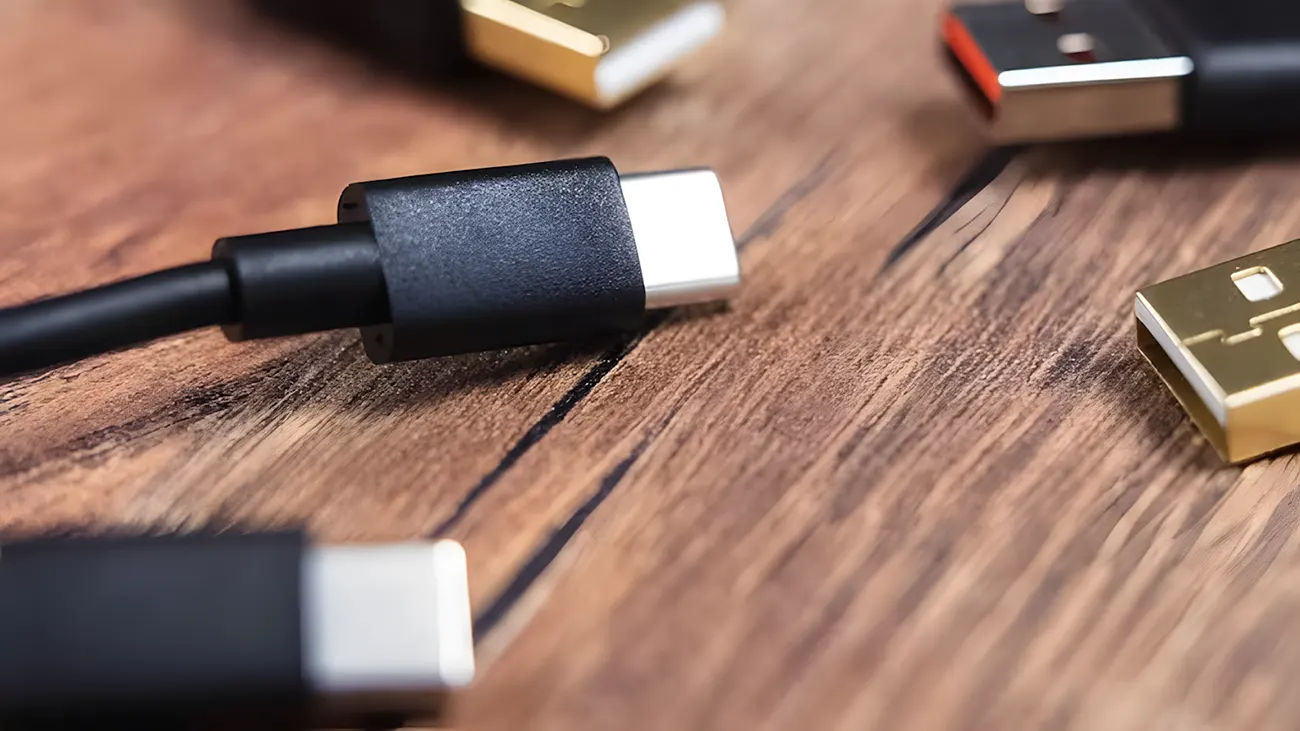
Aluminum foil shielding and braided shielding serve different purposes in USB cable construction. Aluminum foil provides excellent high-frequency EMI protection, while braided shielding offers superior mechanical strength and low-frequency noise suppression. Combining both creates dual shielding that minimizes signal loss and improves overall cable reliability.
Why Is Shielding Important in USB Cable Manufacturing?
What Causes Signal Loss in USB Cables?
As USB standards evolve from USB 2.0 (480 Mbps) to USB 3.2 (up to 20 Gbps) and USB4 (up to 40 Gbps), signal integrity becomes increasingly important.
Electrical interference can cause:
Data transmission errors
Reduced transfer speeds
Device disconnections
Video signal instability
Charging communication failures
Electromagnetic interference (EMI)
For OEM manufacturers, proper shielding is essential to maintain stable performance throughout the cable’s service life.
What Is Aluminum Foil Shielding?
How Does Aluminum Foil Protect Signal Transmission?
Aluminum foil shielding consists of a thin aluminum layer bonded to polyester film and wrapped around the signal conductors.
Its primary function is to block high-frequency electromagnetic interference (EMI).
Typical advantages include:
Excellent 100% conductor coverage
Strong high-frequency shielding
Lightweight construction
Lower material cost
Thin profile suitable for compact cables
Professional USB cables often wrap each high-speed differential pair individually with aluminum foil to improve signal integrity.
What Is Braided Shielding?
Why Is Copper Braiding Used?
Braided shielding is made from woven strands of tinned copper or bare copper surrounding the internal cable structure.
Unlike foil shielding, braid provides:
Excellent mechanical strength
Improved flexibility
Better low-frequency EMI suppression
Higher tensile durability
Lower grounding resistance
Typical braid coverage ranges from:
65%–85% for standard commercial cables
85%–95% for premium USB4 and industrial-grade cables
Higher braid coverage generally improves shielding effectiveness but also increases cable weight and production cost.
How Do Aluminum Foil and Braided Shielding Compare?
Which Shielding Method Is Better?
Each shielding method has different strengths.
| Feature | Aluminum Foil Shielding | Braided Shielding |
|---|---|---|
| Shield Coverage | Nearly 100% | Typically 65–95% |
| High-Frequency EMI Protection | Excellent | Very Good |
| Low-Frequency EMI Protection | Good | Excellent |
| Mechanical Strength | Moderate | Excellent |
| Flexibility | Good | Excellent |
| Grounding Performance | Moderate | Excellent |
| Manufacturing Cost | Lower | Higher |
| Typical Application | USB 2.0, USB 3.2, HDMI | Premium USB-C, USB4, Thunderbolt |
Neither shielding method is universally better. Their strengths complement one another.
What Is Dual Shielding?
Why Do Premium USB Cables Use Both?
Dual shielding combines aluminum foil and braided shielding into a single cable design.
A typical construction includes:
- High-speed conductors
- Individual aluminum foil shielding
- Drain wire
- Overall braided copper shielding
- Outer jacket
This layered structure protects against a wider range of electromagnetic interference while maintaining mechanical durability.
Advantages include:
Reduced signal attenuation
Improved noise immunity
Better grounding performance
More stable high-speed data transmission
Longer service life
This design is commonly used in:
USB4 cables
Thunderbolt cables
Professional docking stations
External SSD cables
High-resolution display cables
Does Shielding Affect Charging Performance?
Can Better Shielding Improve Fast Charging?
Shielding does not directly increase charging speed.
Charging performance primarily depends on:
Copper conductor quality
AWG wire gauge
Contact resistance
USB Power Delivery (USB PD) protocol
Connector quality
However, shielding helps maintain stable communication between the charger and the device.
USB PD uses the CC (Configuration Channel) pins to negotiate voltage and current.
Poor shielding can increase electrical noise, potentially affecting communication stability in electrically noisy environments.
What Wire Gauge Is Commonly Used in Premium USB Cables?
How Do Conductors and Shielding Work Together?
Premium USB cables combine appropriate conductor size with effective shielding.
Typical power conductor recommendations include:
| Cable Type | Typical Power Wire Gauge |
|---|---|
| Standard Charging Cable | 26–28 AWG |
| USB PD 60W Cable | 24–26 AWG |
| USB PD 100W Cable | 22–24 AWG |
| USB PD 3.1 240W Cable | 20–22 AWG |
Lower AWG numbers reduce resistance and voltage drop, while dual shielding protects high-speed data signals from interference.
Together, these design choices improve both charging stability and data reliability.
Which USB Standards Benefit Most from Dual Shielding?
Is Dual Shielding Necessary for Every Cable?
Not always.
Shielding requirements increase with data rate.
| USB Standard | Maximum Data Rate | Recommended Shielding |
|---|---|---|
| USB 2.0 | 480 Mbps | Foil or braid |
| USB 3.2 Gen 1 | 5 Gbps | Dual shielding recommended |
| USB 3.2 Gen 2 | 10 Gbps | Dual shielding recommended |
| USB 3.2 Gen 2×2 | 20 Gbps | Dual shielding strongly recommended |
| USB4 | Up to 40 Gbps | Dual shielding strongly recommended |
| Thunderbolt 3/4 | Up to 40 Gbps | Dual shielding strongly recommended |
As bandwidth increases, even minor electromagnetic interference can affect signal integrity.
How Do Manufacturers Verify Shielding Performance?
What Tests Are Performed?
Professional USB cable manufacturers evaluate shielding through several quality tests.
Common tests include:
Signal Integrity Testing
Measures:
Eye diagram performance
Bit error rate (BER)
Insertion loss
Return loss
EMI Testing
Evaluates:
Radiated emissions
Conducted emissions
Shielding effectiveness
Continuity Testing
Confirms:
Ground continuity
Shield connection integrity
Drain wire performance
Mechanical Testing
Includes:
Cable bending
Pull-force testing
Connector durability
Shield adhesion
These tests help ensure consistent performance in high-speed applications.
What Manufacturing Standards Should Buyers Verify?
How Can OEM Buyers Identify Reliable Suppliers?
Professional cable manufacturers should operate under recognized quality management systems.
ISO9001 Quality Management System
An ISO9001-certified manufacturer typically controls:
Incoming material inspection
Supplier qualification
Process documentation
Production traceability
Corrective actions
Final quality inspection
Quality control procedures commonly include:
IQC (Incoming Quality Control)
IPQC (In-Process Quality Control)
OQC (Outgoing Quality Control)
These processes improve consistency across production batches.
Why Is SAC305 Lead-Free Solder Used?
Does Solder Quality Affect Signal Performance?
Yes.
Premium USB cables commonly use SAC305 lead-free solder.
Typical composition:
Tin (Sn): 96.5%
Silver (Ag): 3.0%
Copper (Cu): 0.5%
Typical processing conditions:
Melting point: approximately 217°C
Reflow temperature: 240–260°C
High-quality solder joints reduce contact resistance and improve long-term electrical reliability.
What Certifications Should OEM Buyers Request?
Which Documents Demonstrate Product Quality?
Before placing bulk orders, buyers should request:
| Certification | Purpose |
|---|---|
| ISO9001 | Quality management system |
| RoHS | Restricts hazardous substances |
| REACH | Chemical compliance |
| UL Recognized Components / UL Cable Certification | Electrical safety |
| USB-IF Compliance | USB specification verification |
For premium high-speed cables, buyers should also request:
Signal integrity test reports
EMI test reports
Electrical resistance reports
Shielding construction specifications
High-speed compliance testing
Quality Inspector’s Advice:
“Shielding is not simply an added layer of metal. A well-designed cable balances foil coverage, braid density, conductor layout, and grounding. Always review shielding construction together with electrical test reports before approving production.”
How Should Businesses Choose the Right Shielding Design?
What Questions Should OEM Buyers Ask Suppliers?
Before selecting a cable manufacturer, ask:
Product Performance
What USB standard does the cable support?
Is dual shielding used?
What is the braid coverage percentage?
Are individual signal pairs foil shielded?
Manufacturing Capability
Is the factory ISO9001 certified?
Are EMI and signal integrity tests performed?
Can shielding specifications be customized?
Product Quality
What AWG conductors are used?
What materials are used for the braid?
Can electrical and compliance reports be provided?
Selecting the proper shielding structure during product development helps improve signal reliability, reduce field failures, and increase customer satisfaction.
Conclusion
Aluminum foil shielding and braided shielding each provide valuable protection against electromagnetic interference, but they excel in different areas. Foil shielding delivers nearly complete coverage and excellent high-frequency noise suppression, while braided shielding offers stronger mechanical protection, lower grounding resistance, and improved low-frequency EMI performance.
For premium USB-C, USB4, and Thunderbolt cables, dual shielding combines the strengths of both materials to provide stable high-speed data transmission, improved durability, and greater resistance to signal loss. For OEM and ODM buyers, evaluating shielding design alongside conductor quality, AWG size, manufacturing standards, and compliance documentation is essential when sourcing high-performance USB cables.
FAQ
1. Is aluminum foil shielding better than braided shielding?
Not by itself. Aluminum foil performs better against high-frequency EMI, while braided shielding provides superior mechanical strength and low-frequency noise suppression. Premium cables often combine both.
2. What is dual shielding in a USB cable?
Dual shielding uses both aluminum foil and braided shielding to improve electromagnetic protection, maintain signal integrity, and increase cable durability.
3. Does shielding affect charging speed?
Not directly. Charging speed depends mainly on conductor size, USB Power Delivery support, and connector quality. However, effective shielding helps maintain stable communication for USB PD negotiation and high-speed data transmission.
4. What should OEM buyers verify when sourcing shielded USB cables?
Buyers should confirm the shielding structure, braid coverage, conductor material, AWG wire gauge, signal integrity testing, EMI test reports, ISO9001 certification, RoHS and REACH compliance, and USB-IF compliance where applicable.
USB cable.
Picture this: You’re sitting at your desk, engrossed in a project
Where Can I Buy a High-Quality Pd Fast Charging Cable?
FAQ
1 cable
USB-C cables certainly.
Share This Artcle:

Fast delivery
Fastest delivery within 22 days

Quick proofing
Fastest 3-day proofing cycle

After-sale protection
24-month long warranty

1V1Customer Service
Professional customer service follow-up
Lorem ipsum dolor sit amet, consectetur adipiscing elit. Ut elit tellus, luctus nec ullamcorper mattis, pulvinar dapibus leo.