
When most people buy a phone charging cable, they only look at things like “fast charging,” “120W support,” or “PD charging.”
But very few people actually understand what truly determines the quality of a cable.
The real core of a charging cable is not the outer wire.
It is the tiny part at both ends of the cable:
The Connector
You can think of the connector as the “main communication hub” between your phone and charger.
Whether a cable can:
charge stably,
transfer data quickly,
avoid overheating,
maintain long lifespan,
and support fast charging,
all depends heavily on the connector design.
Today’s high-quality phone cable connectors are mainly built from four critical components:
Nickel/Gold Plating
Phosphor Bronze Pins
LCP High-Temperature Resistant Core
E-marker Smart Chip
These four parts basically determine whether a cable is a cheap low-end product or a premium fast charging cable.
Now let’s explain everything in simple, easy-to-understand language.
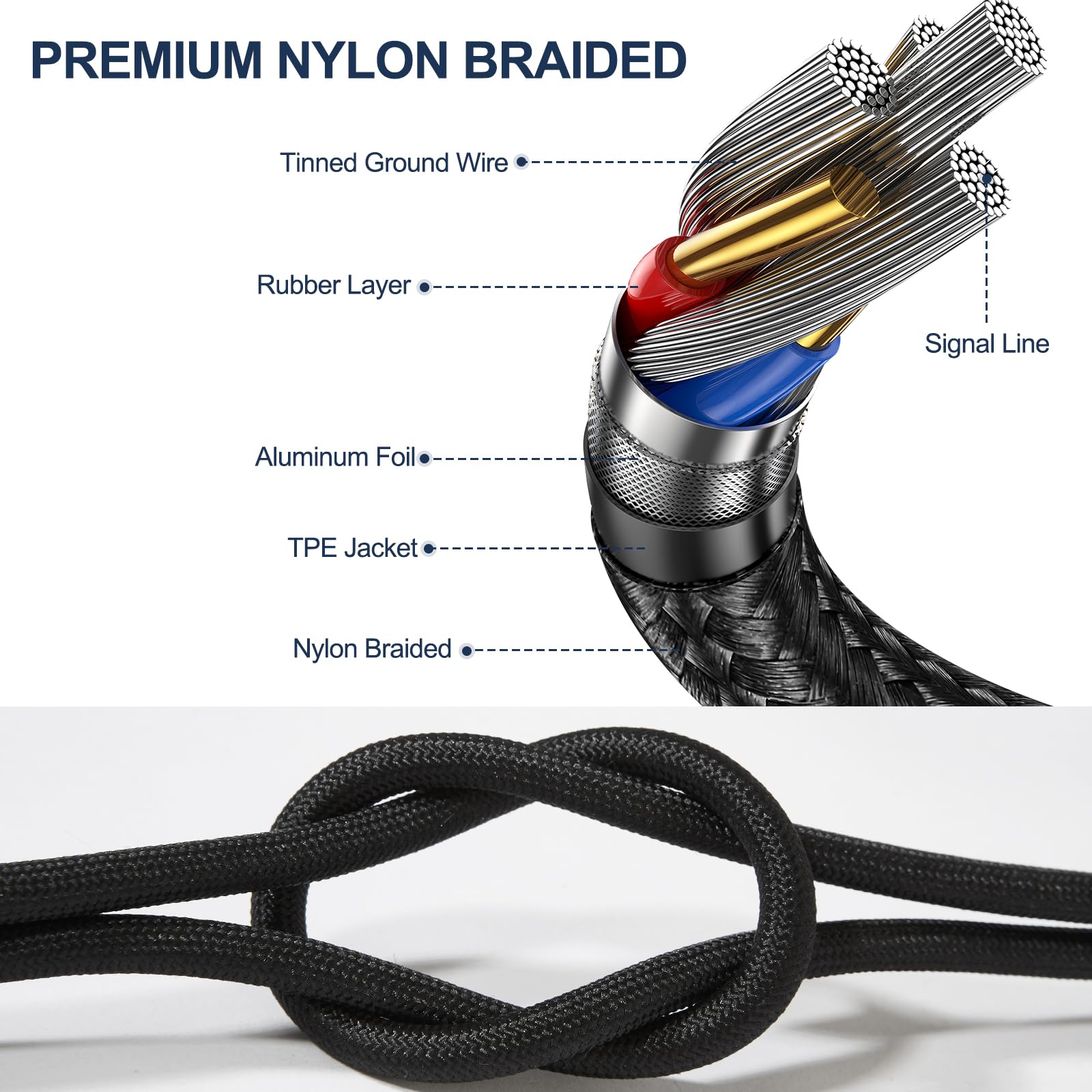
1. What Is a Phone Data Cable Connector?
Simply put:
The connector is the plug part at both ends of the cable.
For example:
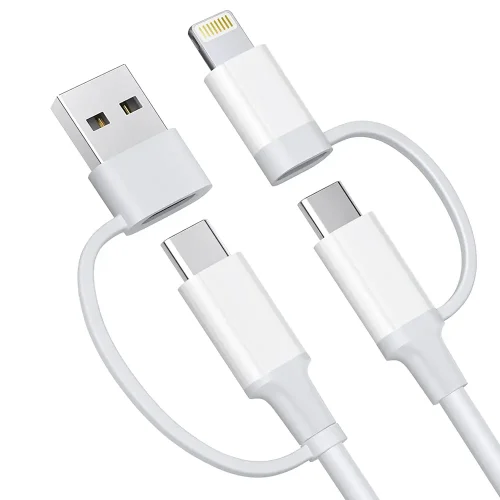
USB-C connector
Lightning connector
USB-A connector
All of these are types of Connectors.
Although connectors are small, they are responsible for many important tasks, including:
Power delivery
Data transmission
Protocol communication
Current control
Fast charging negotiation
Especially now, with technologies like:
PD Fast Charging
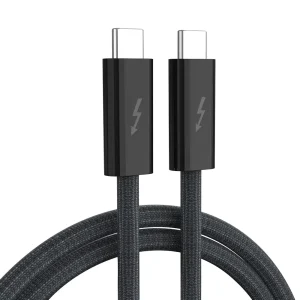
connectors have become far more advanced than before.
Years ago, during the old 5V1A charging era, almost any cable could charge a phone.
But today:
Charging power is higher
Current is larger
Heat generation is greater
Data speed is much faster
If the connector quality is poor, the cable may overheat or even damage the device interface.
That’s why premium cable manufacturers focus heavily on connector technology.
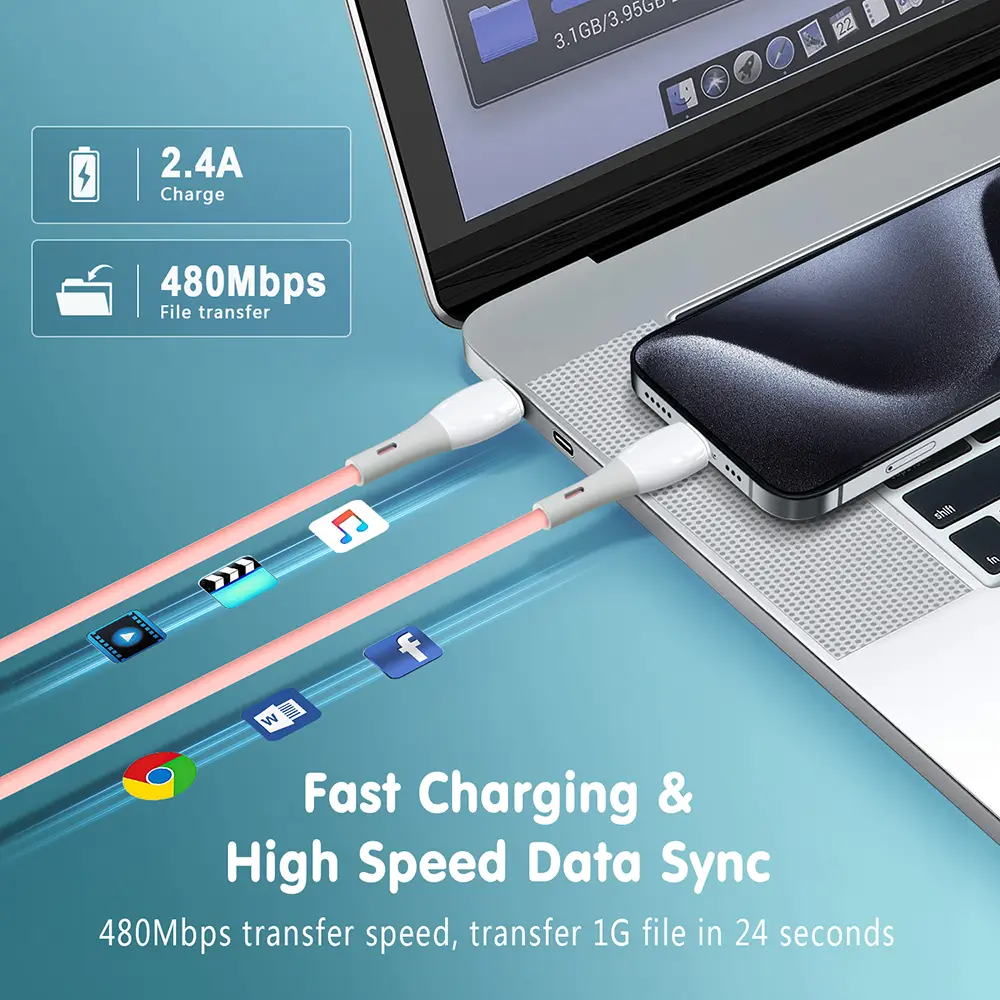
2. First Core Component: Nickel/Gold Plating
Many people think the golden part on a connector is only for decoration.
Actually, it plays a major role in performance.
The Nickel/Gold Plating directly affects:
Conductivity
Oxidation resistance
Plug-in lifespan
Contact stability
Why Do Connectors Need Plating?
Because metal naturally oxidizes when exposed to air.
Once oxidation happens:
Electrical resistance increases
Charging becomes unstable
Connection drops may occur
Heat generation increases
So connectors must have protective plating.
Why Use Nickel First, Then Gold?
The structure usually looks like this:
Copper Material → Nickel Plating → Gold Plating
Function of Nickel Plating
The nickel layer mainly provides:
Corrosion resistance
Better adhesion
Protection against copper diffusion
Without nickel, copper may slowly spread to the surface over time and cause darkening or oxidation.
Function of Gold Plating
The gold plating layer is what really improves connector performance.
Why?
Because gold has one huge advantage:
It does not oxidize easily
That means even after years of use:
The contact remains stable
Resistance stays low
Charging performance remains consistent
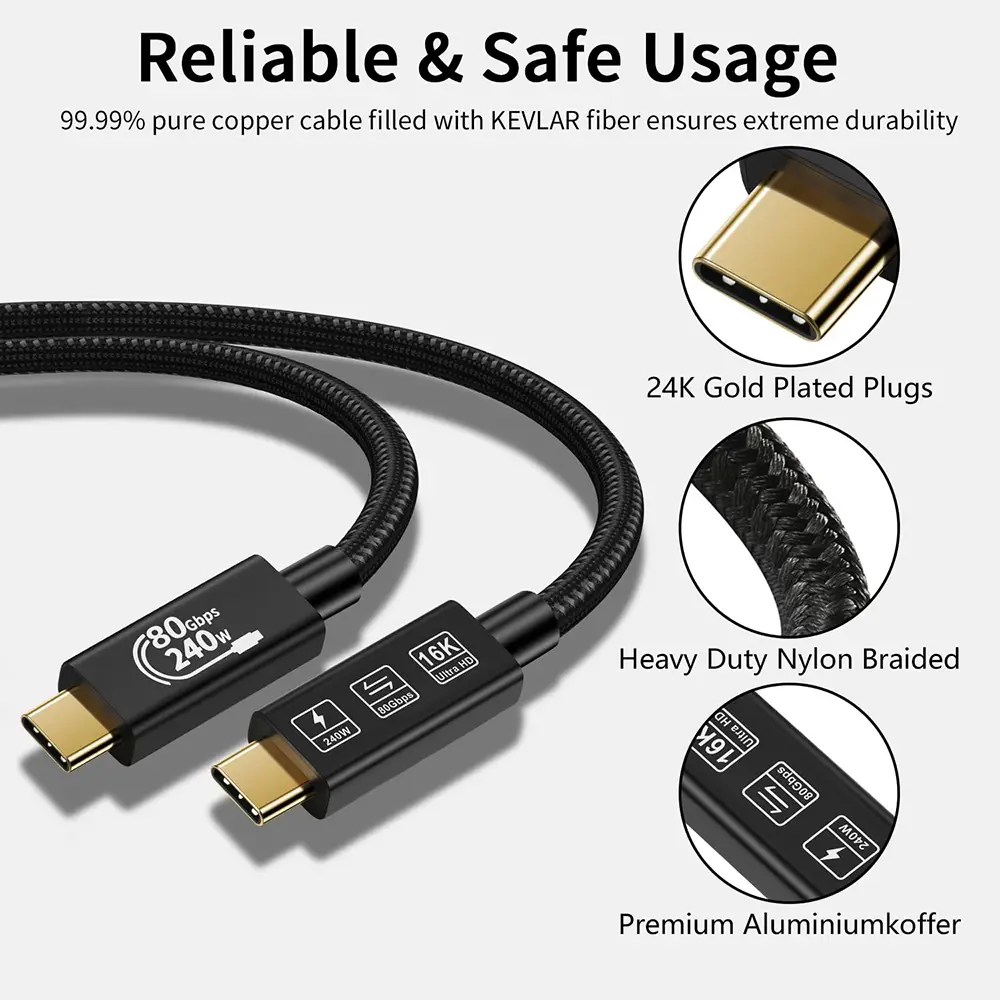
That is why premium cables often advertise:
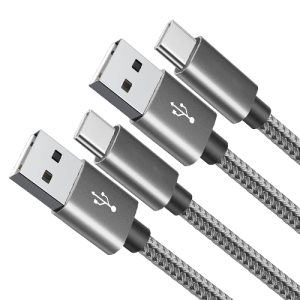
24K Gold Connector
Gold Terminal
These features are mainly used to improve long-term reliability.
Why Cheap Cables Often Have Connection Problems
Low-cost cables usually use:
Very thin plating
Fake gold coating
Only nickel plating
Or sometimes no proper plating at all
After long-term use, problems begin to appear:
Connector turns black
Charging disconnects randomly
Device fails to recognize the cable
3. Second Core Component: Phosphor Bronze Pins
If gold plating is the “outer protection,”
then the Phosphor Bronze Pins are the real “skeleton” of the connector.
They determine:
Conductivity efficiency
Plug-in durability
Elasticity stability
Current carrying capability
Why Not Use Pure Copper?
Many people ask:
“Copper has excellent conductivity, so why not use pure copper?”
The answer is simple:
Pure copper is too soft.
After hundreds or thousands of insertions:
It bends easily
Loses elasticity
Creates unstable contact
That’s why manufacturers use:
Phosphor Bronze
because it offers a better balance between:
Conductivity
Strength
Elasticity
Fatigue resistance
Advantages of Phosphor Bronze Pins
1. Stronger Elasticity
Phone cables are plugged in and unplugged every day.
Over one year, that could mean thousands of insertions.
If the pin elasticity is poor, the connector becomes loose over time.
Phosphor Bronze Pins provide stronger rebound performance and resist deformation.
2. More Stable Conductivity
Today’s cables support:
60W fast charging
100W charging
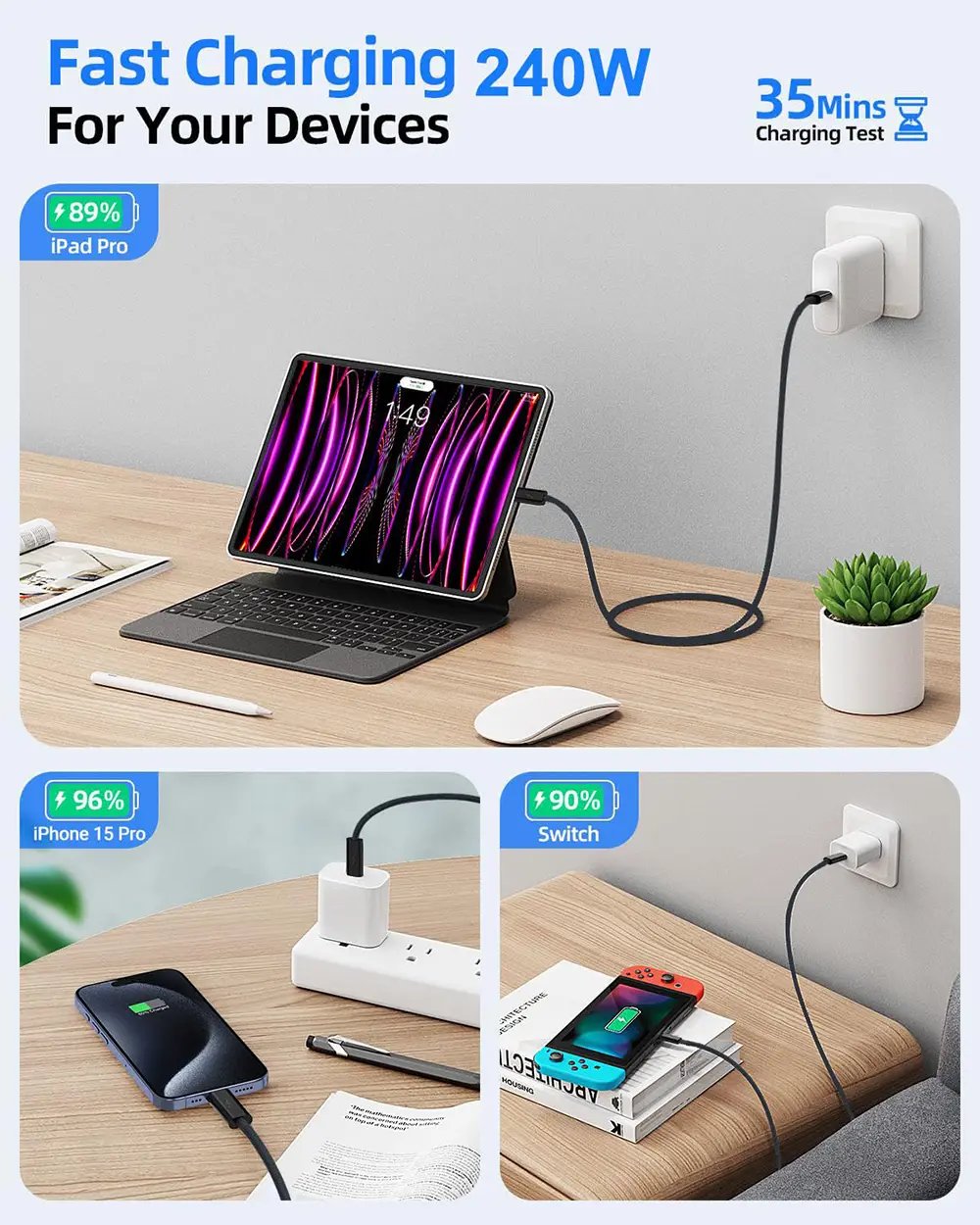
240W PD charging
High current creates more stress inside the connector.
Low-quality pins may cause:
Increased resistance
Heat buildup
Connector damage
High-quality phosphor bronze reduces electrical resistance and improves stability.
3. Longer Lifespan
Premium connectors can achieve:
More than 10,000 insertion cycles
That is the difference high-quality materials make.
4. Third Core Component: LCP High-Temperature Resistant Core
Many people don’t even realize there is a “plastic core” inside the connector.
Actually, the internal pins need a precise structure to hold them in place.
This structure is called:
LCP High-Temperature Resistant Core
What Is LCP?
LCP stands for:
Liquid Crystal Polymer
It is a very advanced engineering plastic widely used in:
Smartphone connectors
Automotive electronics
High-frequency communication devices
Precision electronic components
Why Do Premium Cables Use LCP?
Because fast charging produces more heat than ever before.
Ordinary plastic materials may:
Deform
Melt
Age quickly
But LCP material offers excellent heat resistance.
Many LCP materials can withstand:
260°C
280°C
Or even higher temperatures
Another Hidden Advantage of LCP
Besides heat resistance, LCP also provides:
Excellent dimensional stability
That means the connector structure stays accurate even under high temperatures.
This is extremely important because USB-C connectors contain many tiny pins packed closely together.
If the internal core deforms:
Contact becomes unstable
Data transfer speed drops
Fast charging may fail
5. Fourth Core Component: E-marker Smart Chip (The Most Important Part)
If the previous three components are hardware foundations,
then the:
E-marker Smart Chip
is the true “brain” of modern fast charging cables.
It is one of the most important technologies inside high-end USB-C cables.
What Is an E-marker Chip?
In simple words:
It is an identification and communication chip.
Its main functions include:
Current recognition
Power identification
Fast charging communication
Device authentication
It is especially important in:
USB Type-C to Type-C cables
Why Does 100W Charging Require an E-marker Chip?
According to USB standards:
When current exceeds 3A,
the cable must include:
An E-marker Chip
Otherwise, the device will not allow high-power charging.
This explains why some Type-C cables only support:
18W charging
30W charging
60W charging
even though they physically use USB-C connectors.
What Does the E-marker Chip Actually Do?
When you plug in the cable,
the chip communicates with the charger and says:
“I support 5A current”
“I support 100W charging”
“I support PD protocol”
Only after receiving this information will the charger safely output higher power.
Otherwise, the system automatically limits charging current.
What Happens Without an E-marker Chip?
Possible problems include:
No fast charging
Limited charging power
Slow charging speed
Protocol incompatibility
Device warning messages
Potential overheating risks
That is why most premium cables now include:
E-marker Smart Chips
6. Why Are Premium Charging Cables So Expensive?
Many people think:
“All charging cables look the same.”
But internally, the differences are huge.
The biggest costs in premium connectors come from:
Gold plating process
Phosphor bronze terminals
LCP core materials
E-marker chips
Precision welding
High-frequency testing
Impedance control
These components are not cheap.
Especially today, when cables support:
USB4
Thunderbolt
240W charging
40Gbps data transfer
connector requirements are becoming much more demanding.
7. How to Identify a Good Connector
Here are several easy ways to judge connector quality.
Look at the Connector Color
High-quality gold-plated connectors usually have a softer gold tone.
Cheap connectors often use overly bright fake gold coloring.
Check the Plug-in Feel
A good connector should feel:
Firm
Stable
Smooth
Not loose or shaky
Check Heat Performance
Premium connectors maintain more stable temperatures during long fast charging sessions.
Confirm E-marker Support
Especially when buying:
100W charging cables
140W cables
PD fast charging cables
always confirm whether the cable includes:
An E-marker Chip
8. Future Development Trends of Data Cable Connectors
Connectors will continue becoming more advanced.
Especially with the growth of:
AI devices
Higher power charging
USB4
Thunderbolt 5
future connectors will become more like miniature precision electronic systems.
Future development directions include:
Higher heat resistance
Lower electrical resistance
Faster transmission speed
Smarter chip control
Longer lifespan
Conclusion
Many people think a charging cable is “just a cable.”
But the real performance depends on the tiny:
Connector
Inside every high-quality phone charging cable are four critical components:
Nickel/Gold Plating
Phosphor Bronze Pins
LCP High-Temperature Resistant Core
E-marker Smart Chip
Together, they determine:
Charging stability
Data transfer speed
Connector durability
Cable lifespan
So next time you buy a charging cable, don’t just look at the outer appearance.
Pay attention to the connector materials and internal design.
That is what truly determines cable quality.
Lorem ipsum dolor sit amet, consectetur adipiscing elit. Ut elit tellus, luctus nec ullamcorper mattis, pulvinar dapibus leo.