Apple Chargers Series Technical Guide.
As a global innovation leader in consumer electronics and digital services, Apple has always focused on integrating its hardware and software ecosystem and enhancing user experience. Its charging accessories continue this tradition of simple design, high efficiency, and high compatibility. Currently, Apple’s chargers cover a power range of 20W to 140W, all supporting the PD fast charging protocol. In October 2025, Apple’s second fall product launch event also introduced a USB-C fast charger with gallium nitride (GaN) technology to improve power density, and optimized interface configuration and structural design for different usage scenarios.
This article will systematically review the key parameters and technical features of various products in the Apple charger family, helping you make clear choices for different power requirements and usage scenarios.
Key parameters and technical specifications of Apple's charger series.

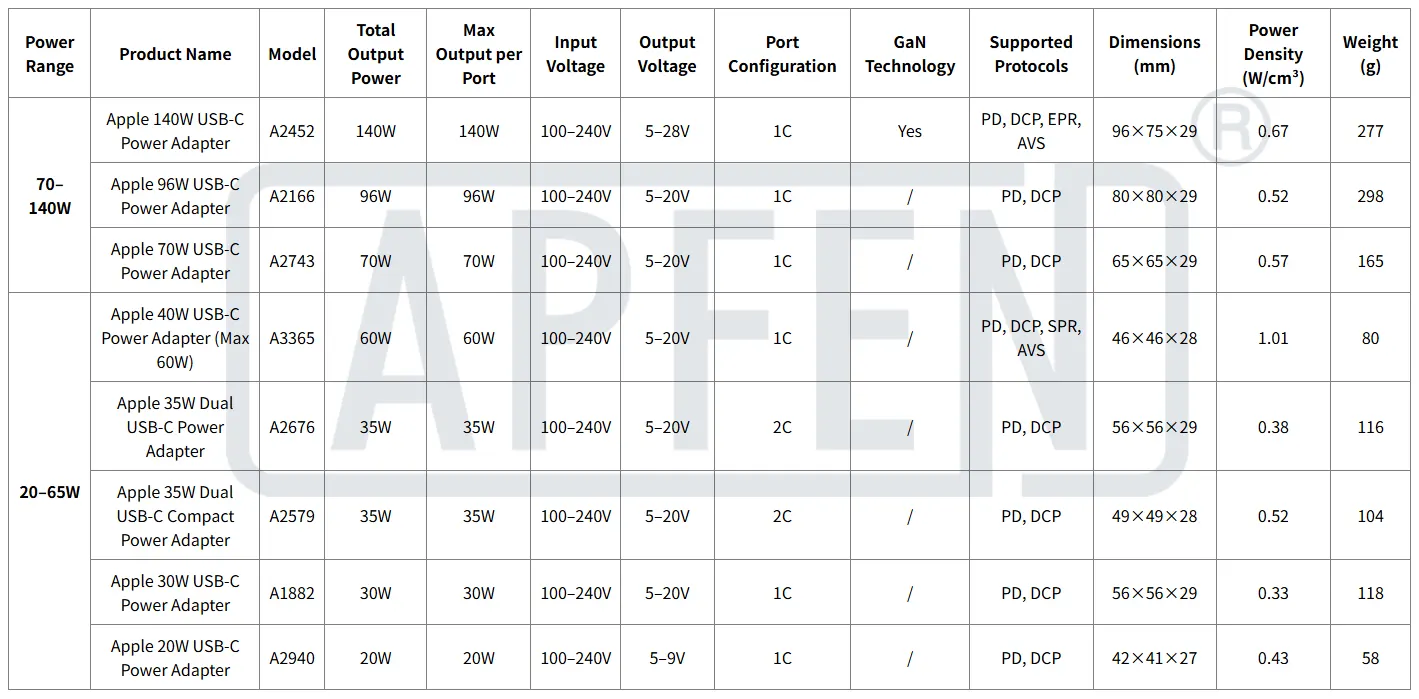
We have compiled a list of eight Apple chargers currently on sale, with total output power ranging from 20W to 140W, primarily covering two power ranges: 20-65W and 70-140W. Specific model numbers, total output power, interface combinations, supported protocols, dimensions, and weights for each charger are listed. Apple currently sells eight charger products, covering a total output power range from 20W to 140W, mainly divided into two power segments: 20-65W and 70-140W. All chargers support PD and DCP protocols, with the 140W model also supporting PD3.1, while the new 40W dynamic power adapter supports PD3.2 and can provide a peak output power of up to 60W. In terms of product form, high-power models continue the classic design and use a single USB-C port, while dual-USB-C models are mostly in the low-to-medium power range.
| Apple charger protocols | ||||
|---|---|---|---|---|
| Charger | Supported Protocols | |||
| PD | DCP | EPR AVS | SPR AVS | |
| Apple 140W USB-C Power Adapter | ✓ | ✓ | ✓ | ✕ |
| Apple 96W USB-C Power Adapter | ✓ | ✓ | ✕ | ✕ |
| Apple 70W USB-C Power Adapter | ✓ | ✓ | ✕ | ✕ |
| Apple 40W Dynamic USB-C Power Adapter (Max 60W) | ✓ | ✓ | ✕ | ✓ |
| Apple 35W Dual USB-C Power Adapter | ✓ | ✓ | ✕ | ✕ |
| Apple 35W Dual USB-C Compact Power Adapter | ✓ | ✓ | ✕ | ✕ |
| Apple 30W USB-C Power Adapter | ✓ | ✓ | ✕ | ✕ |
| Apple 20W USB-C Power Adapter | ✓ | ✓ | ✕ | ✕ |
Regarding specific charging protocols, all eight Apple chargers on sale support PD and DCP fast charging protocols. The 140W USB-C power adapter released in 2015 also supports the PD3.1 EPR AVS protocol. The new 40W dynamic power adapter (up to 60W) supports the PD3.2 SPR AVS protocol.
Apple high-power chargers.
| Apple 70-140W high-power chargers | |||
|---|---|---|---|
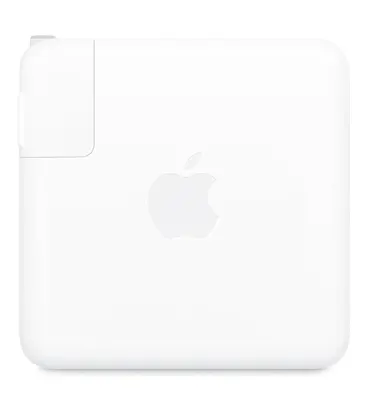
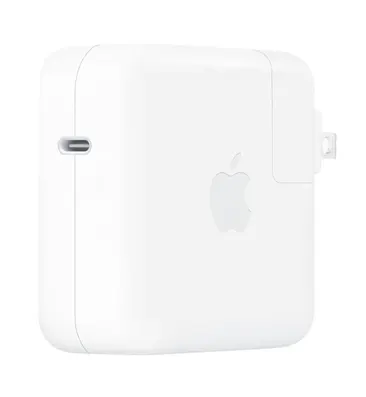
| Specification | Apple 140W USB-C Power Adapter | Apple 96W USB-C Power Adapter | Apple 70W USB-C Power Adapter |
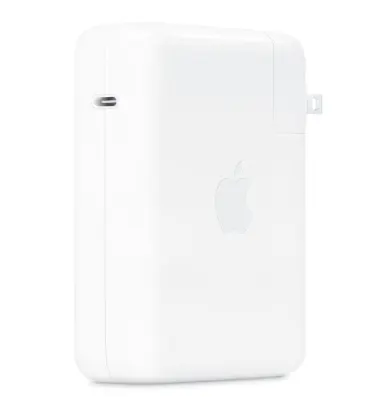
| Model | A2452 | A2166 | A2743 |
| Images | ![]() |
![]() |
![]() |
| Total Output Power | 140W | 96W | 70W |
| Max Output Power (Single Port) | 140W | 96W | 70W |
| Input Voltage | 100-240V | 100-240V | 100-240V |
| Output Voltage | 5-28V | 5-20V | 5-20V |
| Port Configuration | 1C | 1C | 1C |
| Built-in Retractable Cable | / | / | / |
| GaN Technology | Supported | / | / |
| Supported Protocols | PD, DCP, EPR AVS | PD, DCP | PD, DCP |
| Dimensions (mm) | 96×75×29 | 80×80×29 | 65×65×29 |
| Power Density (W/cm³) | 0.67 | 0.52 | 0.57 |
| Weight (g) | 277 | 298 | 165 |
Apple general power chargers.
| Apple 20-40W power chargers | |||||
|---|---|---|---|---|---|
| Specification | Apple 40W Dynamic USB-C Power Adapter (Max 60W) | Apple 35W Dual USB-C Power Adapter | Apple 35W Dual USB-C Compact Power Adapter | Apple 30W USB-C Power Adapter | Apple 20W USB-C Power Adapter |
| Model | A3365 | A2676 | A2579 | A1882 | A2940 |
| Total Output Power | 60W | 35W | 35W | 30W | 20W |
| Max Output Power (Single Port) | 60W | 35W | 35W | 30W | 20W |
| Input Voltage | 100-240V | 100-240V | 100-240V | 100-240V | 100-240V |
| Output Voltage | 5-20V | 5-20V | 5-20V | 5-20V | 5-9V |
| Port Configuration | 1C | 2C | 2C | 1C | 1C |
| Built-in Retractable Cable | / | / | / | / | / |
| GaN Technology | / | / | / | / | / |
| Supported Protocols | PD, DCP, SPR AVS | PD, DCP | PD, DCP | PD, DCP | PD, DCP |
| Dimensions (mm) | 46×46×28 | 56×56×29 | 49×49×28 | 56×56×29 | 42×41×27 |
| Power Density (W/cm³) | 1.01 | 0.38 | 0.52 | 0.33 | 0.43 |
| Weight (g) | 80 | 116 | 104 | 118 | 58 |
Our comparison reveals the specific weight of each product in the Apple charger family. The heaviest is the Apple 96W USB-C power adapter, weighing 298g. While the 140W USB-C power adapter has a higher output power, it uses gallium nitride technology, making it lighter overall. The lightest charger currently on the market is the 20W charger. Overall, there are significant weight differences between chargers of different power and form factors.
We can also see that the Apple charger family mainly covers multiple power levels, from 20-65W and 70-140W. The highest total output power is achieved by the 140W USB-C power adapter, which is currently (2025) Apple’s first charger on the market to support PD3.1 140W output.
All models have essentially the same single-port output power and maximum total output power. The highest-end 140W USB-C power adapter supports the PD3.1 protocol and has a maximum single-port output of 140W. A notable exception is the recently released 40W power adapter, which boasts a peak power of up to 60W.
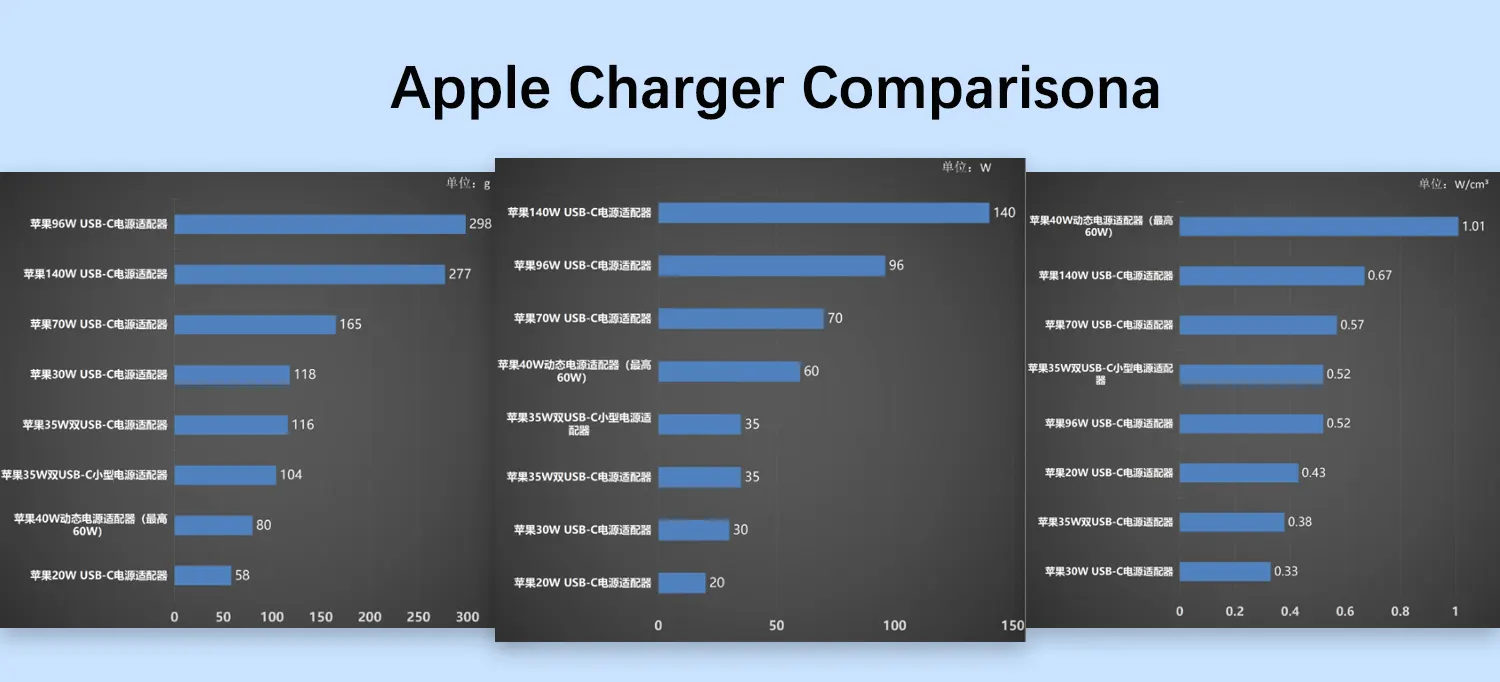
The power density of a charger refers to the ratio of its output power to its volume, usually expressed in W/cm³, reflecting the charger’s energy output capability within a limited space. The bar chart above illustrates the power density of Apple’s charger family. The newest 40W dynamic power adapter, with a peak output power of 60W, achieves a power density of 1.01W/cm³.
Maximum Supported Charging Power for Apple Devices.
In the above content, we’ve detailed the technical specifications of Apple chargers—power levels, the USB-C power delivery protocol, a nd fast charging support at different power levels. However, for B2B buyers and brand owners, charger specifications alone don’t tell the whole story.
What charging power do Apple devices actually support? Actual charging efficiency ultimately depends on the Apple device itself. The charger’s maximum output power doesn’t mean all Apple devices will consume that power. In reality, charging efficiency is limited by factors such as the device itself, the power management system, battery condition, and thermal management.
Each iPhone, iPad, or MacBook has a built-in power management system that defines how much power the device can consume, how long it can charge, and under what temperature conditions it can charge.
To avoid over-designing chargers or improper product placement, understanding the maximum charging power supported by the device is crucial.
IPhone Series.
| iPhone Maximum Supported Charging Power by Model (Updated to 2025) | ||
|---|---|---|
| iPhone Model | Max Charging Power | Notes |
| iPhone 8 / 8 Plus | ~18W | First PD fast-charge support |
| iPhone X | ~18W | PD supported |
| iPhone XR | ~18W | PD supported |
| iPhone XS / XS Max | ~18W | No sustained increase |
| iPhone 11 | ~18W | Same charging ceiling |
| iPhone 11 Pro / Pro Max | ~18W | Charger wattage above 18W has limited effect |
| iPhone 12 mini | ~20W | Slightly higher peak |
| iPhone 12 / 12 Pro | ~22W | Short peak only |
| iPhone 12 Pro Max | ~23W | Thermal-limited |
| iPhone 13 mini | ~20W | Stable PD behavior |
| iPhone 13 / 13 Pro | ~23W | Brief peak |
| iPhone 13 Pro Max | ~27W (peak) | Highest observed peak |
| iPhone 14 | ~23W | Similar to iPhone 13 |
| iPhone 14 Plus | ~23W | No charging gain |
| iPhone 14 Pro | ~27W (peak) | Short duration |
| iPhone 14 Pro Max | ~27W (peak) | Battery protection dominant |
| iPhone 15 | ~23W | USB-C, PD behavior unchanged |
| iPhone 15 Plus | ~23W | USB-C |
| iPhone 15 Pro | ~27W (peak) | USB-C, limited improvement |
| iPhone 15 Pro Max | ~27W (peak) | USB-C, thermal-controlled |
| iPhone 16/16 Plus | ~20-27W | Incremental tuning only |
| iPhone 16 Pro/Pro Max | 30W | Incremental tuning only |
| iPhone 16e | ~20-23W | Entry positioning |
| iPhone 17 | ~27W | No structural power change |
| iPhone 17 Pro | ~27-30W (peak) | Peak-only, not sustained |
| iPhone 17 Pro Max | ~36W (peak) | Same PD ceiling |
| iPhone Air | ~20-23W | Slim design, conservative power intake |
IPad Series.
iPad devices have largely standardized on USB-C charging across recent generations, and Apple’s documentation now explicitly includes fast-charge capability on newer iPad Pro models. However, unlike iPhones, not all iPads are designed to pull the same high wattages; some are optimized around moderate USB-C PD ceilings, while others benefit from higher adapter profiles.
Across the iPad lineup:
iPad Pro (M5) supports faster charging when paired with 60W or higher USB-C PD power adapters, with testing showing up to ~50% charge in about 30 minutes under those conditions.
Standard iPads and Air models accept USB-C power adapters but Apple’s official specs do not list specific high-watt peak figures for all models.
In practice, most non-Pro models still fall into a 20–30W effective ceiling due to hardware and power management limits.
iPad Pro Models.
iPad Pro is the most power-demanding iPad series because of larger batteries and professional usage scenarios. Official Apple fast-charge guidance confirms that the appopriate USB-C power adapter must supply ≥ 60W for the fastest charge window on the latest generation.
| Model | Effective Max Charging Power | Notes |
|---|---|---|
| iPad Pro 11-inch (M5, 2025) | ~60W adapter for fastest charging* | Fast charge to ~50% in ~30 mins with ≥60W; actual intake below adapter max |
| iPad Pro 13-inch (M5, 2025) | ~60W adapter for fastest charging* | Same behavior as 11-inch M5 |
| iPad Pro 11-inch (M4, 2024) | ~60W adapter (peak) | Estimated similar power profile; Apple does not officially list higher watts |
| iPad Pro 12.9-inch (6th Gen) | ~60W adapter (peak) | Same approach as 11-inch Pro |
| iPad Pro 12.9-inch (5th Gen) | ~60W adapter (peak) | Older legacy models behave similarly under PD |
* Apple’s Fast Charge tests indicate* that using a USB-C adapter capable of providing 60W or higher PD output yields the fastest charging behavior on iPad Pro M5 units.
iPad Air & Standard iPad Models.
Apple’s official specs emphasize USB-C charging support, but unlike iPad Pro, they do not publish maximum PD wattage in the main tech spec pages. Typical behavior is consistent with previous models that cap at moderate PD draw levels.
| Model | Effective Max Charging Power | Notes |
|---|---|---|
| iPad Air 13-inch (M3, 2025) | ~30W–35W (practical) | USB-C PD intake is moderate; no high-watt fast charge spec published |
| iPad Air 11-inch (M3, 2025) | ~30W–35W (practical) | Same behavior as 13-inch Air |
| iPad (A16) (2024–25) | ~20W–25W (typical) | Standard iPad lineup; moderate USB-C PD draw |
Even though Apple documentation may not state the exact maximum wattage for each iPad Air or standard iPad, device behavior consistently show that they will not negotiate past ~30–35W under typical USB-C PD charging scenarios. (This aligns with PD behavior seen on legacy iPad charging profiles and third-party observations.)
iPad Mini (USB-C).
Recent iPad mini models also moved to USB-C, but their smaller physical footprint and battery capacity translate into lower effective intake compared with Pro or Air.
| Model | Effective Max Charging Power | Notes |
|---|---|---|
| iPad mini (A17 Pro) | ~20–25W | USB-C PD moderate draw |
| iPad mini (6th Gen) | ~20W | Same practical behavior |
Apple’s USB-C support list confirms the latest mini models support PD charging, but specific fast-charge wattages beyond general USB-C behavior are not listed on the primary support page.
- iPad Pro models benefit most from high-wattage chargers: If you are specifying chargers for product bundles or recommendations, ensure PD profiles ≥ 60W are supported for fastest practical charging on Pro devices.
- Standard iPads and iPad Air models don’t require extremely high wattage: These models typically cap intake well under 40W, so a 30–35W PD charger is optimal in most commercial product lines.
- Uniform USB-C support simplifies designs: A single USB-C PD charger family can cover multiple iPad tiers if the PD output and cable quality are correctly matched.
Share This Artcle:

Fast delivery
Fastest delivery within 22 days

Quick proofing
Fastest 3-day proofing cycle

After-sale protection
24-month long warranty

1V1Customer Service
Professional customer service follow-up